
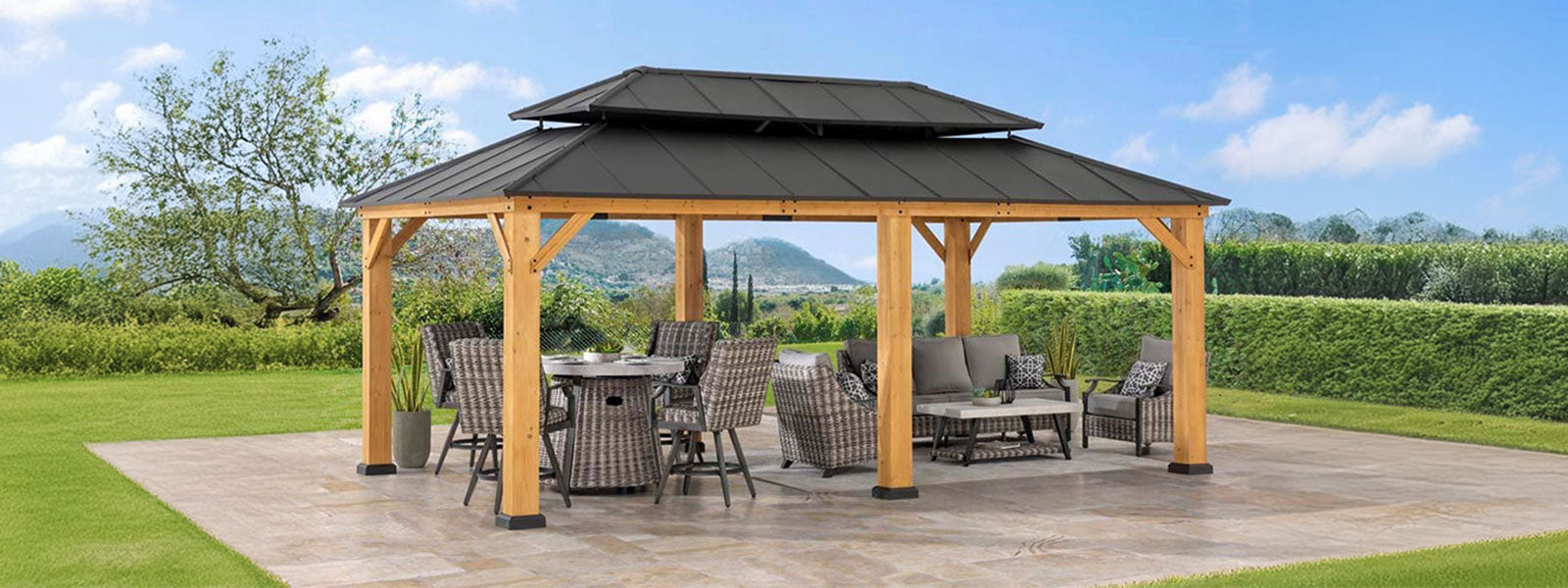
Real install lessons and where most kits trip up
I still remember the back patio at a Pacific Beach café where I boxed up a 12×16 gazebo kits order and thought, “This will be simple.” Last June I supervised that install (June 2018) and the table-side seating grew 20% in evening covers—so why do so many Outdoor Gazebo setups fail to last? I ask because the data keeps coming back: cheap fasteners corrode, canopies delaminate under UV, and anchors pull out in a gust.

After more than 15 years in outdoor living and garden structures, I can point to a few repeat offenders. Instruction sheets that assume every installer is a contractor; hardware packs missing critical washers; wind loads listed in vague terms. These are not abstract problems. On one job in downtown San Diego, we swapped the supplied post anchors for galvanized bolt-in anchors mid-install—because the original spike anchors bent during a test pull—and that single swap saved the client two costly repairs within a year. That kind of detail matters: aluminum frame components vary, UV-resistant fabric options differ, and fasteners should be stainless or hot-dipped (not plated). My advice—watch the small stuff early, because it compounds.

Comparing kit designs and planning for durability
What’s Next?
Technically speaking, a good kit balances structural rating, material specification, and site-matching. I break that down when I review offers for wholesale buyers: frame metallurgy (aluminum alloy grade), canopy composition (UV-resistant fabric weight and weave), and attachment systems (post anchors and corrosion-resistant fasteners). When I compare two popular lines of gazebo kits, the cheaper option often saves upfront cost but forces custom fixes—extra blocking, new anchors, different screws—so labor swamps any savings. Also—small interruption—many vendors still list only “outdoor use” without specifying wind zone ratings. That’s a problem.
Looking forward, my pick for clients is the kit that gives clear numbers: wind rating, gauge or alloy spec, and complete fastener lists. I urge wholesale buyers to request a sample canopy swatch and a cut of the frame extrusion before committing. Here are three practical metrics I use to evaluate any kit: 1) Confirmed wind rating (e.g., tested to 90 mph or specific ASCE reference), 2) Material specs (alloy grade for aluminum frame, UV-resistant fabric denier and coating), and 3) Complete anchoring solution (bolt-in post anchors with torque specs). Those three checks cut failure risk dramatically—trust me, I’ve swapped anchors on installs more than a dozen times.gazebo kits that clarify these points save time and warranty headaches. Finally, I keep coming back to a simple rule: if a vendor can’t show you a past installation in a similar microclimate, move on. We learned that the hard way once—won’t repeat it.
I’m sharing this from the field because wholesale decisions echo through seasons and repairs—measurements matter, materials matter, and so does the installer briefing. For practical sourcing, consider partners who document specs clearly and stand behind them—like SUNJOY — they make it easier to avoid the small failures that become big fixes.