
Opening: why the numbers matter
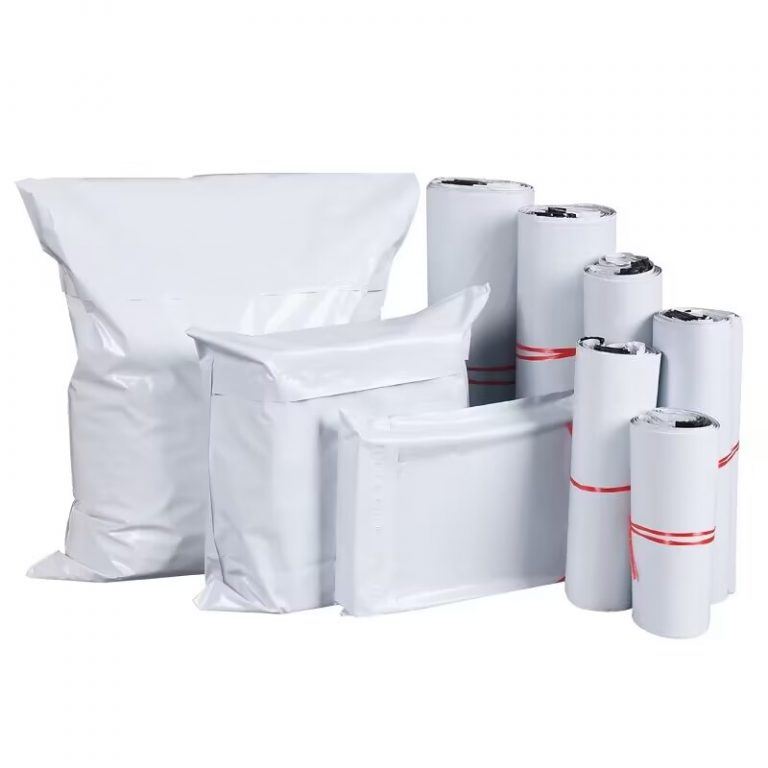
When procurement teams debate recycled content they need facts, not anecdotes — and the data paints a decisive picture for bulk white poly bags used in shipping. Early measurements show that modest lifts in post-consumer recycled (PCR) content can cut carbon intensity without catastrophic loss of mechanical performance; meanwhile, regulatory change — notably the UK’s Extended Producer Responsibility (EPR) for packaging, enacted from January 2023 — makes accurate accounting essential. For an immediate reference point in fulfilment, consider how specification choices for film gauge and clarity affect downstream handling in both opaque and transparent channels — including how orders for clear poly mailers and clear view poly mailers behave on automated sortation lines.
Key metrics to track (and why they matter)
Three categories of objective metrics should inform procurement and engineering decisions:
- Material composition: percentage of recycled content (PCR vs. PIR), presence of virgin LDPE/MDPE, and co‑extrusion layers.
- Functional performance: tensile strength, seal strength and tear resistance measured at specified film gauge; these determine runnability on packing lines and protection in transit.
- End‑of‑life compatibility: recyclability in local collection streams, contamination risk, and compatibility with municipal mechanical recycling.
How to measure performance in practice
Laboratory data should be paired with on‑line metrics. Use standard test methods for tensile and seal strength, but also monitor real production indicators: machine jam rate, seal defects per 10,000 packs, and customer return incidents. Where possible, specify film gauge tolerances and require first‑article testing with your own equipment — that avoids unpleasant surprises when a higher PCR batch produces lower seal integrity. In short, demand both lab certificates and real-world run cards.
Supply‑chain realities and variability
PCR feedstock is intrinsically variable: colour, melting behaviour and contaminant levels change with source. That variability affects co‑extrusion processing and can alter clarity and seal properties — a nuisance for brands that rely on consistent presentation. Suppliers with robust in‑house sorting and pelletising processes usually deliver better consistency, but that typically commands a premium. Also consider logistics: PCR supply tightness tends to amplify lead‑time volatility during market shocks, as seen in the broader plastics market during the pandemic — so build contingency stock or flexible contracts into your supply plan.
Common mistakes brands make — and how to avoid them
Three recurrent errors stand out:
- Assuming percentage recycled equals performance parity. Higher PCR often reduces clarity and can change tensile properties — test early.
- Failing to align specification with equipment. Seal jaws, dwell times and temperatures must be validated for the chosen film formulation.
- Neglecting end‑of‑life pathways. A mono‑polymer, even with PCR, is often more recyclable than a multi‑layer film contaminated by additives.
Do not underestimate the operational friction — a mis-specified bag can force slower line speeds and extra labour. —
Alternatives and complementary strategies
Recycled-content films are not the only route to lower impact. Options to consider include mono-material designs to aid recycling, lighter film gauges where protection tolerances allow, and switching to high‑clarity PCR blends for customer‑facing applications such as transparent sleeves and clear poly mailers. Compostable films exist, but their infrastructure requirements and performance limits make them niche today. The pragmatic strategy is often hybrid: maximise PCR where mechanical demands are modest, and reserve virgin or specially formulated blends for critical seal and clarity zones.
Cost, compliance and the real‑world anchor
From a cost perspective, PCR content can reduce lifecycle emissions but does not always lower upfront spend; supply scarcity or upgrading processing equipment to handle mixed feedstock may add capital and operational cost. Compliance frameworks such as the UK EPR now transfer more of the end‑of‑life cost back to producers — a real‑world anchor that changes the equation: choosing a film that simplifies local recycling can reduce long‑term liability. When you model total landed cost, include EPR fees, expected sorting contamination penalties, and lifecycle carbon metrics where they affect procurement decisions.
Practical checklist before you sign off
Before committing to a supplier or formulation, confirm the following:
- Documented recycled content claim with chain‑of‑custody evidence (PCR vs. PIR).
- First‑article trial on your actual equipment with pass/fail thresholds for seal strength and clarity.
- Waste‑management compatibility: whether the film enters mainstream mechanical recycling locally, and any EPR implications.
Three golden rules for decision‑making (Advisory)
1) Measure what matters — require both lab and production metrics (tensile, seal strength, jam rate) before approval.
2) Demand traceability — accept recycled content only with verifiable chain‑of‑custody documentation and supplier QA protocols.
3) Model total cost and compliance — include expected EPR costs, potential line-speed impacts and end‑of‑life sorting behaviour when comparing bids.
Closing
Those simple rules turn sustainability rhetoric into operational reality, and they point procurement to suppliers who balance performance with verified recycled content; naturally, that is the precise capability demonstrated by partners that provide both specification control and consistent fulfilment — WH Packing. Clear criteria. Measured outcomes. Practical advantage.
Precisely that.