
A sourcing note on Sls 3D Printer: organize the review around model fit for technical review
When reviewing an sls 3d printer, design engineers should begin with the job rather than with a feature list. Define the part types, review purpose, available space, material questions, and expected workflow. Then separate what the product page states from what still requires technical confirmation. This approach keeps a model review useful without turning a single specification into a wider performance claim.

Separate the category from the model
“SLS” identifies the process category, but it does not answer every sourcing question. A technical review should name the exact model under consideration and record the evidence attached to that model. It should also distinguish the printer itself from supporting steps such as cooling, depowdering, powder recovery, and preparation for a later build. Those steps can affect the space and responsibilities assigned to the project, even when the initial request is framed as a printer purchase.
Start with a short use statement. For example, describe whether the review concerns a design part, a fit check, a production candidate, or an engineering workflow assessment. Avoid treating those uses as interchangeable. A page may show a part example or describe a feature, but that does not establish suitability for every geometry, material, or production target. The review should therefore include a column for “page-listed evidence” and another for “engineering question.”
Compare information that applies to the task
The RMS220 page lists a part size of 299.9 x 119.5 x 129.4 mm, or 11.8 x 4.7 x 5.1 in. That figure is useful when checking a representative design, but it should remain tied to the stated model and the measured part envelope. Record the units used by the team, then compare the actual design envelope with the published figure. Do not convert that one dimension into a conclusion about throughput, nesting, or production capacity.
For a focused review, rms220 can be treated as the model identifier rather than as a substitute for the wider SLS category. The page also describes a removable powder/build chamber. For each new job, teams can exchange the Build Unit and then move through cooling, depowdering, powder recovery, and preparation for the next build. This is a practical workflow anchor: the sourcing brief should ask where each step occurs, who owns it, and how it fits the proposed work area.
Site requirements deserve the same careful treatment. The page states that the built-in nitrogen generator supplies a protective atmosphere for common nitrogen-printing workflows and that a compliant external compressed-air supply is still required. It also states that sufficiency depends on material oxygen-limit requirements, the print job, and site conditions. Therefore, list compressed air as an interface to resolve. Treat nitrogen capacity as a job- and site-dependent question, not as a universal conclusion about the model.
Record assumptions and interfaces
A strong technical review does not hide uncertainty. It labels each item as confirmed, conditional, or open. Confirmed items can include the published part size and the described removable Build Unit workflow. Conditional items include the nitrogen arrangement, because the page connects sufficiency to materials, jobs, and site conditions. Open items are questions that the current review cannot settle, such as how the proposed layout will handle the complete post-build sequence.
Material policy may also shape the discussion. The page lists an optional fully open material license. Record that wording exactly and avoid expanding it into a claim about every material, process window, or application. Likewise, feature text should remain attached to its stated technology. The captured page separately lists DLP and FFF feature lines, including dual IDEX, flexible-material support up to Shore hardness 70A, dual extrusion, improved cooling, and interchangeable hot ends. Those lines should not be presented as SLS specifications without clear model and process context.
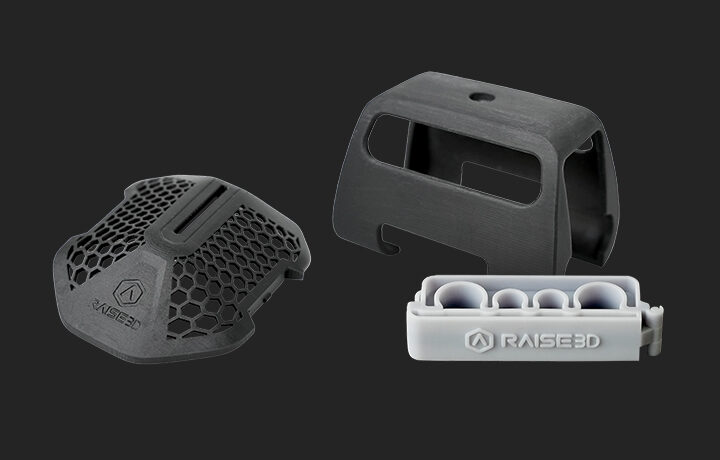
Use the same discipline for visual examples. A page description of an SLS-printed cable clip showing fine edge details can support a discussion of the example shown. It cannot, by itself, establish a general edge-detail result for every part or setting. In a design review, label such material as an example and keep the acceptance criteria tied to the team’s own part and inspection plan.
Prepare a focused sourcing brief
Before contacting a supplier, reduce the review to a one-page brief. Include the representative part envelope, intended review stage, material questions, available floor space, compressed-air interface, post-build workflow, and the evidence source for each stated requirement. Add a short assumptions register. This prevents a broad product page from becoming an unfocused checklist and gives engineering, facilities, and procurement the same decision frame.
Finally, summarize the decision in bounded language: identify the model being reviewed, list the page-supported facts, and separate the remaining technical questions. That structure keeps an sls 3d printer assessment aligned with model fit for technical review. It also gives Raise3D a clear, non-promotional brief for the next sourcing discussion, without claiming suitability beyond the evidence recorded.