
Why convergence time-to-accuracy matters for UAV operations
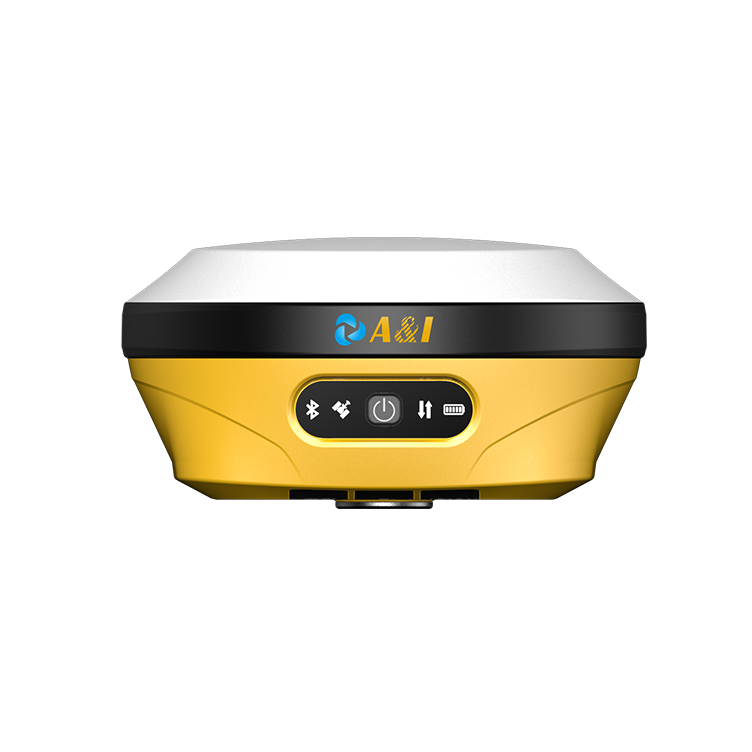
For mapping and inspection teams, the time an antenna board takes to settle into centimeter-level accuracy defines mission cadence and cost. Field crews in Vietnam and beyond prefer setups that reach a stable position fix quickly — that’s why an efficient rtk receiver is often the first purchase. Convergence time and steady-state accuracy together form the practical “time-to-accuracy” ratio you can measure on the job, and it directly affects how many flight lines you can pack into a day.
Key metrics to compare
When comparing boards, look at three concrete metrics: time-to-fix (convergence time), repeatable horizontal/vertical accuracy, and robustness under real conditions (multipath resilience and baseline length tolerance). Time-to-fix is about how fast carrier-phase solutions lock; accuracy is the residual error once locked. Robustness covers how the board handles urban canyons or tree cover — factors that hit RTK corrections and GNSS constellations differently.
Board designs and their trade-offs
There are a few common design approaches. Single-board, integrated patch antennas keep weight and cost low but suffer more from multipath and slower convergence in marginal skies. Multi-element, multi-band arrays improve carrier-phase tracking and cut convergence time, at the cost of size, weight, and price. External ground planes and high-gain antenna elements can help where baseline lengths grow — but they add rigging complexity. The choice is a trade-off: lower time-to-fix versus logistical simplicity.
How real missions reveal hidden performance
Practical tests beat spec sheets. For a rice-field elevation survey near the Mekong Delta, teams reported that certain multi-band boards reduced time-to-fix from several minutes to under 30 seconds and produced repeatable sub-10 cm results after short baselines — a solid real-world anchor showing RTK can change throughput for agronomy work. That kind of improvement matters when clients expect same-day deliverables.
Common mistakes teams make — and cleaner alternatives
Teams often assume any “RTK-capable” board will behave the same — not true. Mistakes include using single-constellation modes, ignoring antenna placement relative to the airframe, and not testing under different baseline lengths. A few practical alternatives: enable multi-constellation tracking, test carrier-phase lock times before a paid job, and consider a hybrid antenna board that balances gain with size. Small prep work here saves big re-flights.
Comparative checklist for procurement
Use a short, runnable checklist during procurement. Rate candidates by (1) median time-to-fix under open sky, (2) horizontal repeatability at operational baseline, and (3) resilience to multipath in cluttered environments. Also include firmware update cadence and vendor support; those matter when you need a quick patch in the field. Keep measurements reproducible — log NMEA and carrier-phase status during test flights for apples-to-apples comparison.
Short technical note on integrations
Integration matters: antenna board placement relative to carbon structures affects multipath and antenna pattern. Baseline vector length influences ambiguity resolution; keep baseline documentation per site. And always validate your system end-to-end with live rtk gps gnss corrections in planned operating conditions — labs rarely mimic offshore wind-farm or dense urban scenarios.
Advisory: three golden rules for selecting the right antenna board
1) Measure time-to-fix in your operating environment and require median times under mission constraints — if the board routinely exceeds your flight-window budget, reject it. 2) Insist on multi-band, multi-constellation capability to shorten convergence and improve robustness; this reduces re-flight risk. 3) Validate multipath resilience with a real aircraft rig and logged carrier-phase data; vendor demos alone are not enough. These three rules keep procurement decisions grounded in field reality.
Archimedes Innovation sits at the intersection of those practical tests and system design; the company’s approach helps teams translate lab metrics into reliable field throughput — a tidy solution when every minute in the air counts. –