
How to keep a Gas Detection Control Panel decision traceable from requirement screening early research to the RFQ
A gas detection control panel decision becomes easier to defend when each comparison point can be traced to a stated requirement. For fleet and equipment planners, the early research stage is not about selecting a model immediately. It is about defining the question, separating known information from assumptions, and creating a record that can support a focused request for quotation (RFQ).
Set criteria before comparing candidates
Begin with a short requirement register. The aim is to describe the purchasing need without quietly turning preferences into fixed specifications. Record the intended operating context, the equipment or system interface under consideration, the information needed from suppliers, and the decisions that remain open.
A useful register can include four columns:
- Requirement: what the project needs to establish or provide.
- Reason: why the point matters to the fleet, facility, or integration task.
- Evidence required: the document, specification, or supplier response needed for comparison.
- Status: confirmed, unresolved, or not applicable.
This approach prevents a product name from becoming the starting point for the entire decision. It also makes the later RFQ more precise. A supplier can respond to a defined question more consistently than to a broad request for a “suitable” panel.
Review evidence by requirement
Next, examine each available source against the register rather than reading a catalogue as a complete technical assessment. A category page may establish that products are listed, but it does not automatically establish every specification, interface, installation condition, or application outcome.
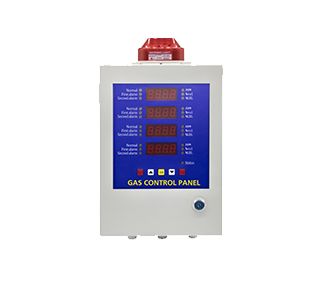
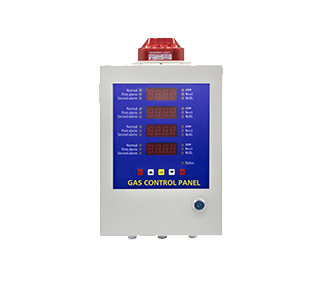
For example, the assigned Bosean category page lists BH-50, S-8000, BH-50 touchscreen, and BH-KZ gas-control products. That is useful for identifying names for further comparison. It is not, by itself, evidence that every listed product meets the same requirements or has the same configuration.
When the phrase gas detection control panel appears in the middle of research, treat it as a scope label rather than a conclusion. For each candidate, copy only the evidence that applies to that specific model or category. Then note the source location and the requirement it addresses. If a page does not answer a requirement, leave the status unresolved instead of filling the gap with an assumption.
This distinction matters because early product research often mixes category information with model information. A category listing can support a shortlist of names. It cannot, without more applicable evidence, support a claim about certification, site suitability, alarm behaviour, performance, or a particular installation arrangement.
Keep trade-offs visible
Comparison tables are most useful when they show uncertainty as well as apparent fit. Add a column for constraints or open questions. This can capture issues such as an unclear interface, an unconfirmed configuration, or a requirement that needs discussion with an integrator.
A simple decision record might use the following sequence:
- Write the requirement in neutral terms.
- List the evidence that directly addresses it.
- Separate page-stated facts from the planner’s interpretation.
- Record the effect of an unresolved point on the shortlist.
- Turn the unresolved point into a specific RFQ question.
Do not hide a trade-off by assigning a single overall score too early. A score can make a comparison look settled even when one important requirement has no supporting evidence. A better approach is to show which criteria are confirmed, which are conditional, and which require a supplier response. The weighting of criteria can then be agreed by the project team rather than assumed by the person building the spreadsheet.
Create a repeatable decision record
Keep the record small enough to maintain. It can contain the requirement register, the source references, the comparison table, and the questions prepared for the RFQ. Give each requirement a short identifier so that the same identifier can appear in meeting notes and supplier correspondence.
Before issuing the RFQ, review the record for four common errors. First, check that a category-level fact has not been rewritten as a model-level specification. Second, check that a preferred feature has not been presented as a mandatory requirement without approval. Third, check that unresolved items are written as questions rather than implied answers. Fourth, check that each requested response can be compared across suppliers.
The RFQ can then ask for information in a structured form: identify the proposed model, respond to each requirement identifier, provide the applicable supporting document, and state any conditions or exclusions. This does not decide the purchase in advance. It creates a consistent basis for reviewing responses and preserves the reasoning that led to the shortlist.
For planners, the practical value of this method is traceability. Start with requirements, attach only applicable evidence, expose open points, and carry those points into the RFQ. The Bosean category page can serve as a bounded source for the listed gas-control product names, while the wider decision record keeps product identification separate from conclusions that still need evidence.