
Which evidence belongs in a Fixed Combustible Gas Detector review of supplier questions early research?
When a project manager begins researching a fixed combustible gas detector, the first task is not to select a model. It is to define which supplier answers the project actually needs. Early research should separate stated product information from assumptions about installation, performance, compliance, and site suitability. That distinction creates a review that can support later procurement without presenting unverified conclusions as facts.

Clarify the decision before comparing suppliers
A supplier enquiry is more useful when it describes the decision boundary. Start by recording the intended application in general terms, the gases or hazards under consideration, the required signal path, the installation environment, and the organisations responsible for design and integration. These points are questions for the project team to settle, not facts that can be inferred from a product category.
Next, identify what the supplier must confirm. A practical early-research question set can include:
- Which exact model and configuration are being proposed?
- Which gases and measurement ranges are stated for that model?
- What outputs, connections, power requirements, and control interfaces are documented?
- Which environmental or installation conditions are explicitly covered?
- Which claims are specifications, and which are descriptions of intended use?
- Which requirements remain open because the available product information does not address them?
This approach avoids treating a general category description as proof that a particular device meets every project requirement. It also gives the supplier a focused brief rather than a broad request for assurances.
Build a concise comparison framework
Use one row for each requirement and one column for each evidence type. The evidence columns might be labelled supplier page, technical document, supplier response, project requirement, and status. Keep the wording close to the source. For example, “4–20 mA output is stated” is more precise than “the device integrates with the control system”. The second statement adds an engineering conclusion that may depend on interfaces, wiring, configuration, and the wider system.
A useful status field can distinguish confirmed wording, clarification required, and outside current evidence. This is not a judgement on the supplier. It is a way to prevent different kinds of information from being merged in the same comparison cell. A published specification may answer one question while leaving installation responsibility or system compatibility unresolved.
Project managers can also record the source location beside each important entry. Page headings, specification tables, document titles, and response dates help preserve context when several models or suppliers are reviewed together. The record should identify the exact model wherever a specification is model-specific. Information should not be transferred between products simply because their names or categories appear similar.
Use page evidence without extending its meaning
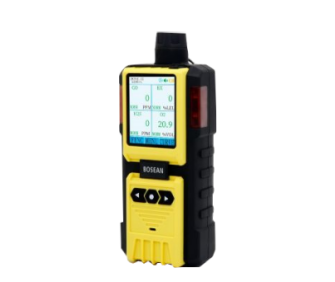
One real-world catalogue example illustrates the boundary. The Bosean BH-60 page states that the device has 4–20 mA standard signal output and supports on-site monitoring and alarm through simple settings. That is useful evidence for a supplier review of a fixed combustible gas detector because it identifies two features stated on the page. It does not, by itself, establish certification, suitability for a particular site, safety outcomes, or configuration details that the page does not list.
The same discipline applies to gas coverage, technical values, and application language. A specification should be recorded as belonging to the named page and model. It should not be rewritten as a universal capability of all products in the category. If the project needs a conclusion beyond the wording shown, express it as a question for the supplier or as a requirement for a separate technical review.
Keep unsupported conclusions visible
Early research often creates pressure to produce a shortlist quickly. A concise evidence record can resist that pressure without stopping progress. Instead of assigning a pass or fail when information is incomplete, write the unresolved point in operational terms: “interface details needed”, “application conditions to be defined”, or “scope of stated specification to be confirmed”. These notes preserve the issue for the next procurement stage.
It is also useful to separate four statements in meeting notes: what the project requires, what the supplier page says, what the reviewer reasonably infers, and what still needs a response. The separation makes later discussion more efficient. It prevents an inference from being repeated as though it were a published specification.
Carry the questions into procurement
The final research record should be short enough to use in a supplier meeting. Include the exact product reference, the evidence location, the requirement being tested, and a clear question where the evidence does not settle the matter. Ask suppliers to respond against the same headings so that comparisons remain consistent. Keep commercial, technical, integration, and documentation questions distinct rather than combining them into a single general request.
A defensible review does not need to answer every question at the beginning. It needs to show which decision is being considered, which evidence applies to that decision, and which requirements remain open. Using that structure, project managers can take the next procurement step with a clearer record of what is known and what still requires a bounded supplier response from Bosean.