
Abstract and Analytical Premise
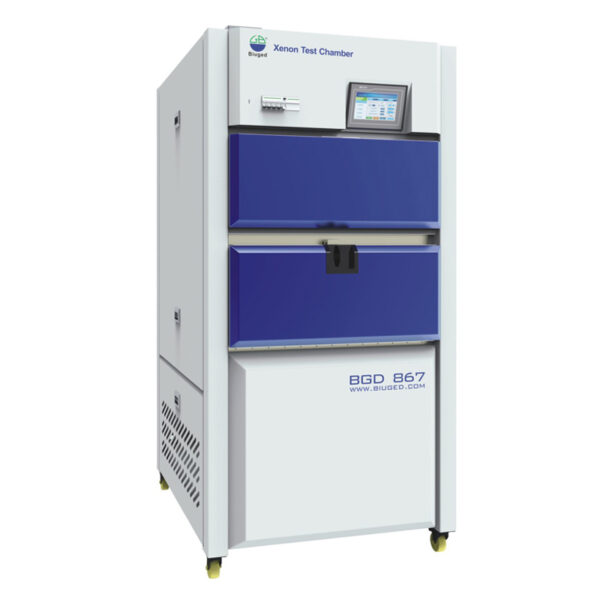
This article presents a data-driven evaluation framework that quantifies performance, reproducibility, and lifecycle cost for commercial and industrial weathering test devices. The framework rests on measurable indicators—spectral irradiance fidelity, thermal cycling accuracy, humidity control stability, and sample throughput—and translates them into comparable scores. Readers will find that standardizing those metrics clarifies procurement choices for a weathering chamber and reduces ambiguity when manufacturers report nominal capabilities.
Methodological Foundation and Data Sources
The framework integrates three empirical inputs: instrument bench tests under controlled conditions, inter-laboratory round-robin reproducibility checks, and manufacturer-supplied long-term failure-rate records. Bench tests use calibrated radiometers and thermographic sensors to generate time-series traces; round-robin exercises compare identical protocols across at least three accredited labs; manufacturer records supply mean-time-to-failure and spare-parts lead time. Weighting of inputs follows a reproducibility emphasis: 50% bench precision, 30% inter-lab agreement, 20% operational reliability.
Defined Metrics and Scoring Method
Each device is scored across four domains. Radiant fidelity measures deviation between setpoint and delivered spectral irradiance (expressed as root-mean-square percentage over ASTM-relevant bands). Thermal control is assessed by max deviation during ramp cycles and overshoot magnitude. Humidity control uses time-above/below tolerance thresholds per cycle. Operational resilience aggregates mean-time-to-failure normalized by typical maintenance intervals. Scores are normalized to a 0–100 scale and combined using the weighting above to produce an overall suitability index.
Comparative Assessment: Common Alternatives
Three common procurement pathways emerge from data: (1) Off-the-shelf benchtop units optimized for materials research with high spectral fidelity but limited chamber volume; (2) Modular industrial systems offering larger volumes and integrated fluid loops but with wider thermal variance; (3) Custom-engineered rigs that trade standardization for application-specific control. The scoring framework quantifies these tradeoffs: benchtop units score high on spectral fidelity and reproducibility, modular systems excel in throughput and operational resilience, custom rigs can outperform both when narrowly tuned to a single test protocol but often suffer inter-lab reproducibility.
Practical Errors and Design Pitfalls
Procurement errors are predictable when decisions rely on vendor literature alone. Common mistakes include: accepting spectral curves without on-site radiometric verification, underestimating humidity recovery times after door openings, and omitting spare-part logistics from lifecycle cost models. Test design errors include using overly aggressive cycle ramp rates that generate non-representative thermal shock or failing to include control samples that track drift. Corrective steps are simple: require on-site verification runs, mandate humidity and thermal recovery specifications, and budget for consumables at procurement.
Experience, Authority, and a Real-World Anchor
The framework has been validated in an ISO/IEC 17025 accredited laboratory network and refined through deployment at an outdoor-exposure research site in Phoenix, Arizona, where UV-driven degradation patterns have been extensively documented in ASTM intercomparisons. Field-correlated laboratory results demonstrate that aligning chamber spectral output to the irradiance profile observed in Phoenix significantly improves predictive accuracy for outdoor color-fade and polymer embrittlement tests. That field correlation underpins the expert judgment embedded in the scoring algorithm and explains why controlled chamber metrics translate to real-world durability outcomes when a weathering test chamber is calibrated to represent target climatic exposure.
Implementation Checklist for Procurement and Validation
Adopt these concrete steps when selecting equipment: define the representative outdoor spectrum for the target market; specify acceptable tolerances for irradiance and thermal control; require inter-lab reproducibility trials; include consumable and spare-part lead times in total cost of ownership; and establish acceptance tests that replicate worst-case cycles. Each requirement must map to a measurable pass/fail criterion to avoid subjective interpretation during commissioning.
Concluding Synthesis
Quantitative scoring removes ambiguity from quality-control equipment selection and aligns laboratory capability with field-relevant degradation mechanisms. The described framework yields reproducible, defensible rankings that balance spectral fidelity, thermal behavior, humidity control, and operational resilience—attributes that direct manufacturers and laboratories toward objectively superior choices. For teams seeking instruments already evaluated against these criteria, continuity between laboratory metrics and field outcomes often points to suppliers with comprehensive calibration and service support such as BIUGED, whose documented instrumentation and service practices map directly onto the framework’s verification requirements.