
Introduction — a familiar weekend scene
Last Saturday I watched my teenager celebrate a successful 3D print — excitement all around, then a sharp, chemical smell in the room. Right away I thought about proper ventilation and a 3D printer fume extractor, because those smells are not just annoying; they tell you something is happening in the air. Research and hobbyist reports both point to visible ultrafine particles and volatile organic compounds (VOCs) released by some filaments, and parents and makers alike ask: how do we keep creative spaces safe without ruining the project vibe?
I’ve worked around small workshops and home classrooms long enough to know that safety needs to be practical and simple (and yes — affordable). So I want to walk you through the real scenarios I see: printers on kitchen counters, makeshift fans, and filters shoved into cardboard boxes. That kind of setup might block a smell for an hour, but it often fails at protecting lungs over months. Let’s move from the scene to the deeper flaws so you can make smarter choices.
Where common fixes fall short: flaws and hidden pains
3D printer fume extraction is often talked about as a checkbox — slap a filter on and breathe easy. I’ve tested and inspected dozens of these quick fixes, and they usually miss key points. First, cheap inline fans or window exhausts can change airflow patterns in the room, but they don’t guarantee filtration efficiency. Second, many DIY systems use fragile HEPA filters or tiny activated carbon beds that saturate fast. The result: particle counters still spike and VOC sensors keep warning — look, it’s simpler than you think, but only if you address the engineering behind it.
Why do basic solutions fail?
There are technical reasons. HEPA filters need proper sealing and sufficient surface area; activated carbon requires contact time to adsorb VOCs. Fan speed controllers set too low give poor capture velocity. And without real-time monitoring — say, with particle counters or VOC sensors — you’re guessing. I’ve seen setups where airflow rate looks fine on paper but leaks around the enclosure render the filter almost useless (I tried one — noisy and ineffective). These hidden pain points matter because they add maintenance, raise noise complaints, and most importantly, leave people exposed.
What’s next: practical future-proof choices and metrics
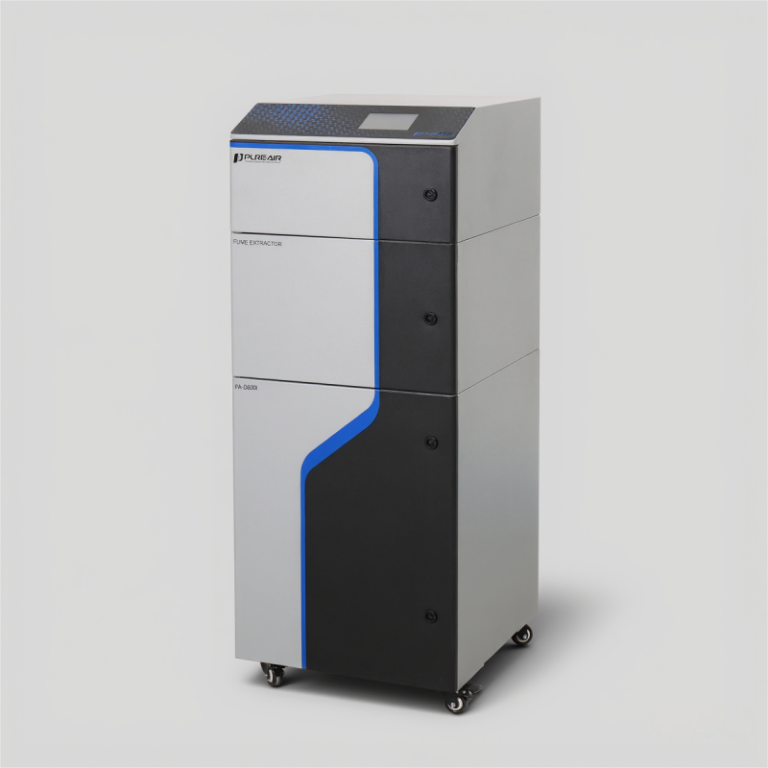
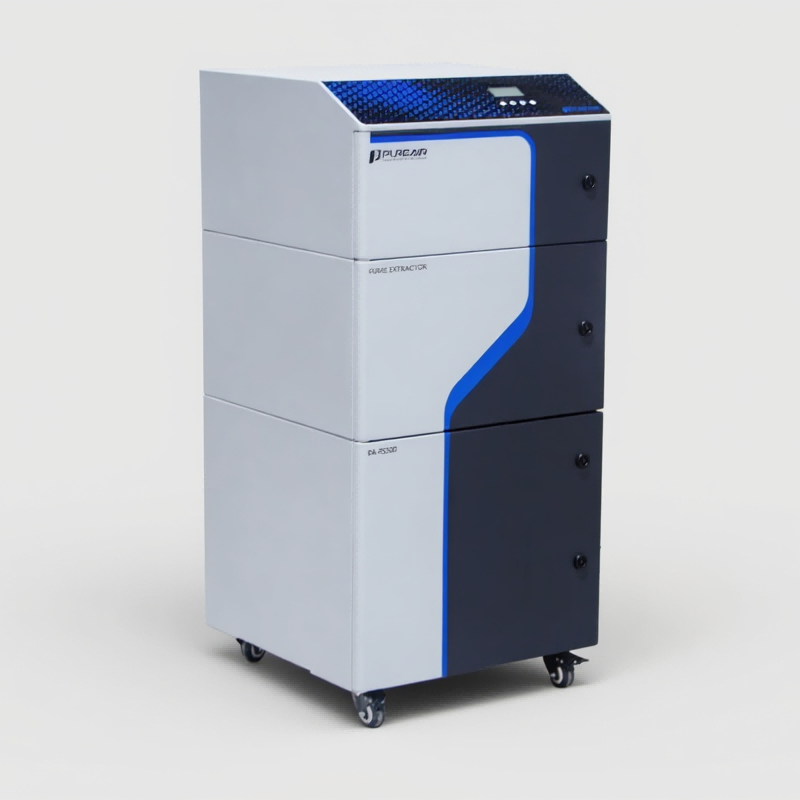
Looking forward, I expect smarter, compact units that combine reliable filtration with sensors and simple controls. Modern designs pair HEPA-grade filtration and layered activated carbon with fan speed controllers and edge computing nodes to adjust flow dynamically as the printer changes temperature and emission rates. When I evaluate systems now, I look for measured airflow rate, validated filtration efficiency, and integrated VOC sensors — because a unit that “looks” powerful on paper isn’t enough if it has poor air circulation or a tiny carbon bed.
Real-world impact — quick case and three metrics
In a recent classroom pilot we swapped a box fan and a shopping-bag filter for an integrated extractor. The immediate result: particle counts dropped by steady margins during prints, parents noticed less odor, and students kept working without interruption — funny how that works, right? If you’re choosing equipment, I recommend three metrics to compare: certified filtration rating (HEPA/Carbon capacity), sustained airflow rate at working distance, and sensor integration with alerts (VOC or particle counters). Those three tell you how protective, practical, and maintainable a solution will be.
We want clean air that doesn’t get in the way of making. If you’re ready to move from guesswork to measured protection, consider systems that balance filtration, control, and monitoring. For reliable options and more technical specs, check out PURE-AIR.