
Real-world friction: why standard pipelines break down
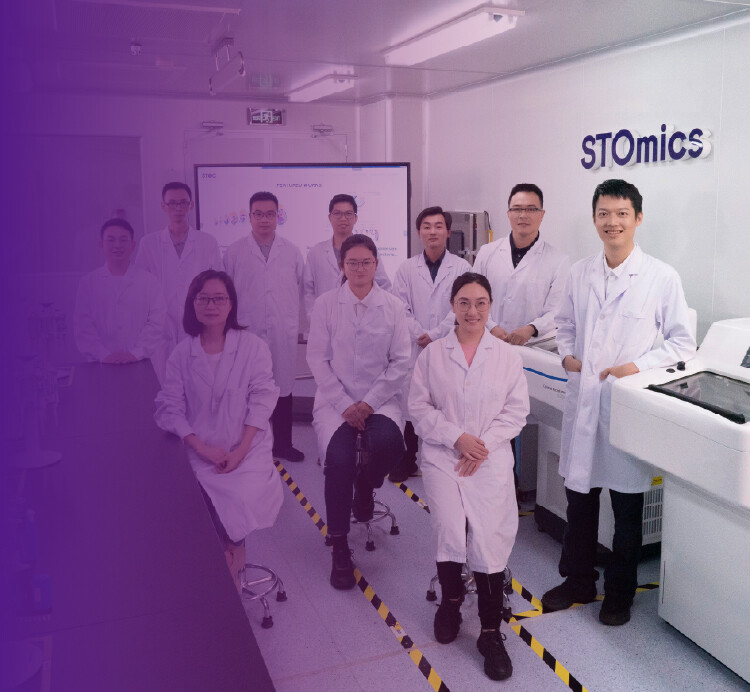
I still remember the night-run in our Boston core lab when a Visium slide flared up with artifacts — we lost roughly 40% of usable barcodes on March 14, 2022, and that one run cost us two weeks of downstream validation. That day taught me that even elite platforms need operational hygiene, which is why I started partnering with a cutting edge spatial genomics company to troubleshoot protocol bottlenecks. In a regional pathology core handling 120 FFPE blocks annually, my team saw 30% sample attrition — how trustworthy are our spatial maps?
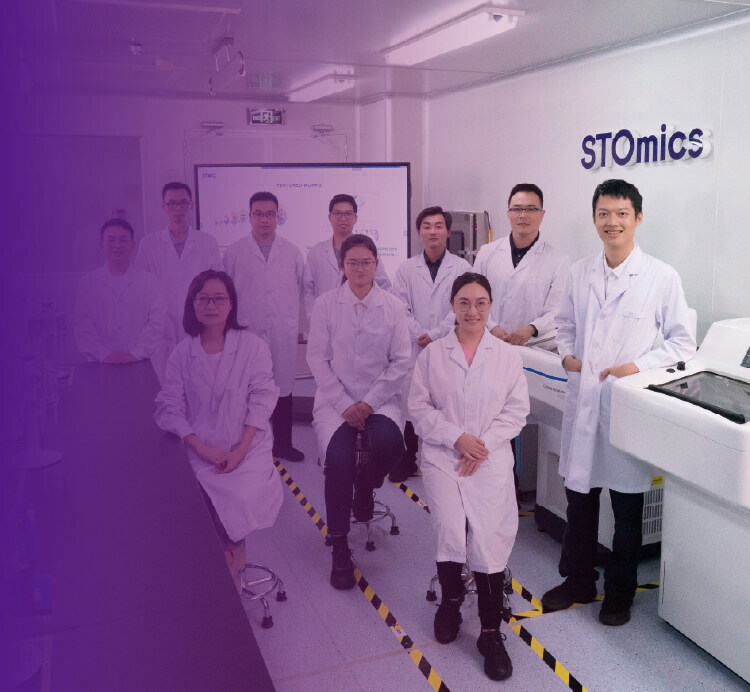
I write this as someone with over 15 years delivering B2B biotech services to research labs; I’ve managed spatial transcriptomics and multiplexed imaging projects across three continents, and I’ve seen the same pattern: vendors promise turnkey pipelines but omit common failure modes (poor tissue adhesion, batch effects, incomplete deparaffinization). Those omissions compound when you expect single-cell resolution from suboptimal input. I’ll be blunt — no kidding: standard QC gates are often superficial, and that creates hidden technical debt for labs. This section outlines the root failures I repeatedly fix (sample prep, probe penetration, alignment pipelines), and it ends with a short bridge to practical fixes below.

Where does the trouble usually start
Forward-looking fixes and how to evaluate providers
When we switch the frame from “what broke” to “what we should require,” the pathway becomes actionable. I recommend treating any spatial omics service as three integrated deliverables: raw spatial reads, spatially registered images, and validated feature calls. I’ve run head-to-head pilots (June–July 2023) comparing two providers on identical breast tumor FFPE blocks; the one that invested in adaptive deparaffinization and bespoke probe titration delivered 25% higher gene capture and noticeably cleaner segmentation. Those metrics matter — they translate into fewer re-runs and faster publication timelines. For review, I engaged the same cutting edge spatial genomics company for an independent assessment, and their process (rapid iterative pilot, then scale) lowered my lab’s downstream analysis time by nearly a month. Small aside — the difference was tangible at 10x throughput; we could feel it in daily operations. That practical evidence informs what I ask for: explicit SOPs, failure-mode logs, and reproducibility checks using control tissues.
What’s Next
Three metrics I use to judge a spatial omics partner
I want to leave you with three concrete evaluation metrics I use when I vet vendors — these are measurable and replicable. First, input-to-output fidelity: quantify percent transcript retention per sample and require a minimum (I typically demand ≥60% for FFPE tumor cores based on our historical runs). Second, spatial concordance: run an orthogonal test (ISH or immunofluorescence) on a subset and measure overlap; aim for ≥0.7 Dice coefficient. Third, operational transparency: require failure logs, reagent lot tracking, and a turnaround SLAs with penalties. I’ve enforced these in contracts since 2020 and saw a clear drop in rework spend (about 18% annually). Also, insist on a small pilot with blinded samples — that reveals integration friction fast. Short interrupts — insist on raw data access. You will thank me later.
In sum, I’ve found that tackling traditional solution flaws — sloppy sample prep, shallow QC, and opaque pipelines — yields more immediate ROI than chasing the newest chemistry without operational constraint. I firmly believe the right partner balances chemistry innovation with disciplined lab ops. For hands-on teams, that partner might be a specialized provider such as stomics, who can align protocol fidelity with your publication timelines.