
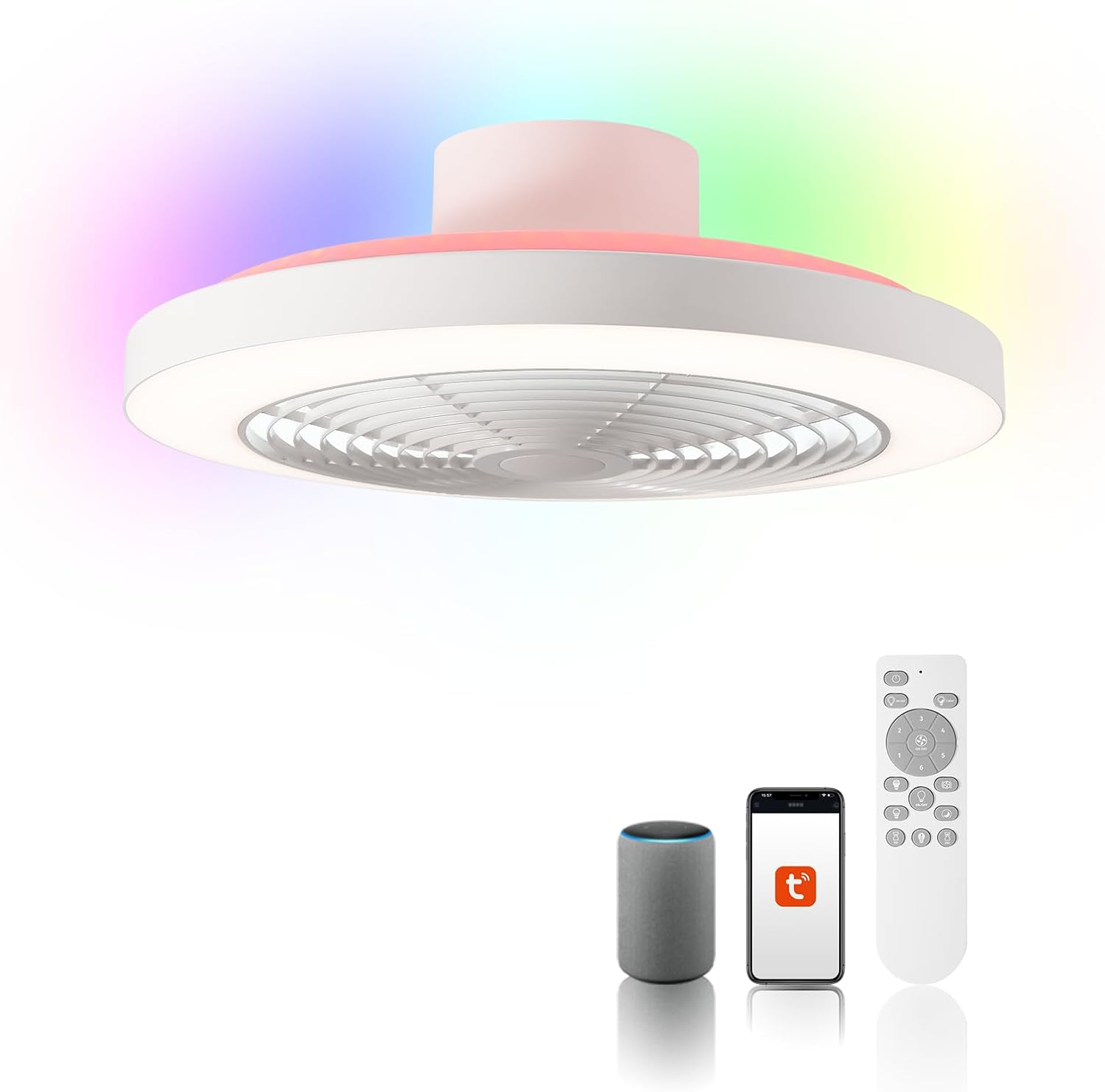
The problem we all ignore until the fan fails
Too many smart ceiling fans with lights start strong and then sputter into wobble, noise, or flickering within a few seasons — and the result is a bedside argument about warranties and returns. The core issue is rarely the app or the lightbulb; it’s the marriage of motor architecture and blade engineering. If you’re curious about alternatives that sidestep some of those failure modes, consider a bladeless ceiling fan with lights as one path that rethinks airflow and thermal loads from the outset. Real-world shocks like the 2020 global supply-chain disruptions taught manufacturers to prioritise resilient designs — and buyers to value engineering that reduces dependency on fragile parts.

Why motor phase matters — not just for power, but for survival
At the heart of longevity is the motor. Traditional AC motors and newer BLDC (brushless DC) variants differ in how many electrical phases they use and how smoothly they convert electricity into torque. Multi-phase BLDC designs emulate a three-phase waveform to minimise torque ripple and vibration; less ripple means lower bearing stress, reduced noise, and less heat build-up in the stator and windings. Heat is the silent killer: high temperature accelerates insulation breakdown, weakens solder joints on the PCB, and shortens LED life in integrated light modules. Choose a fan with an efficient motor topology and intelligent control electronics — soft-start and PWM drive reduce inrush current and mechanical shock on the gearbox or bearings.
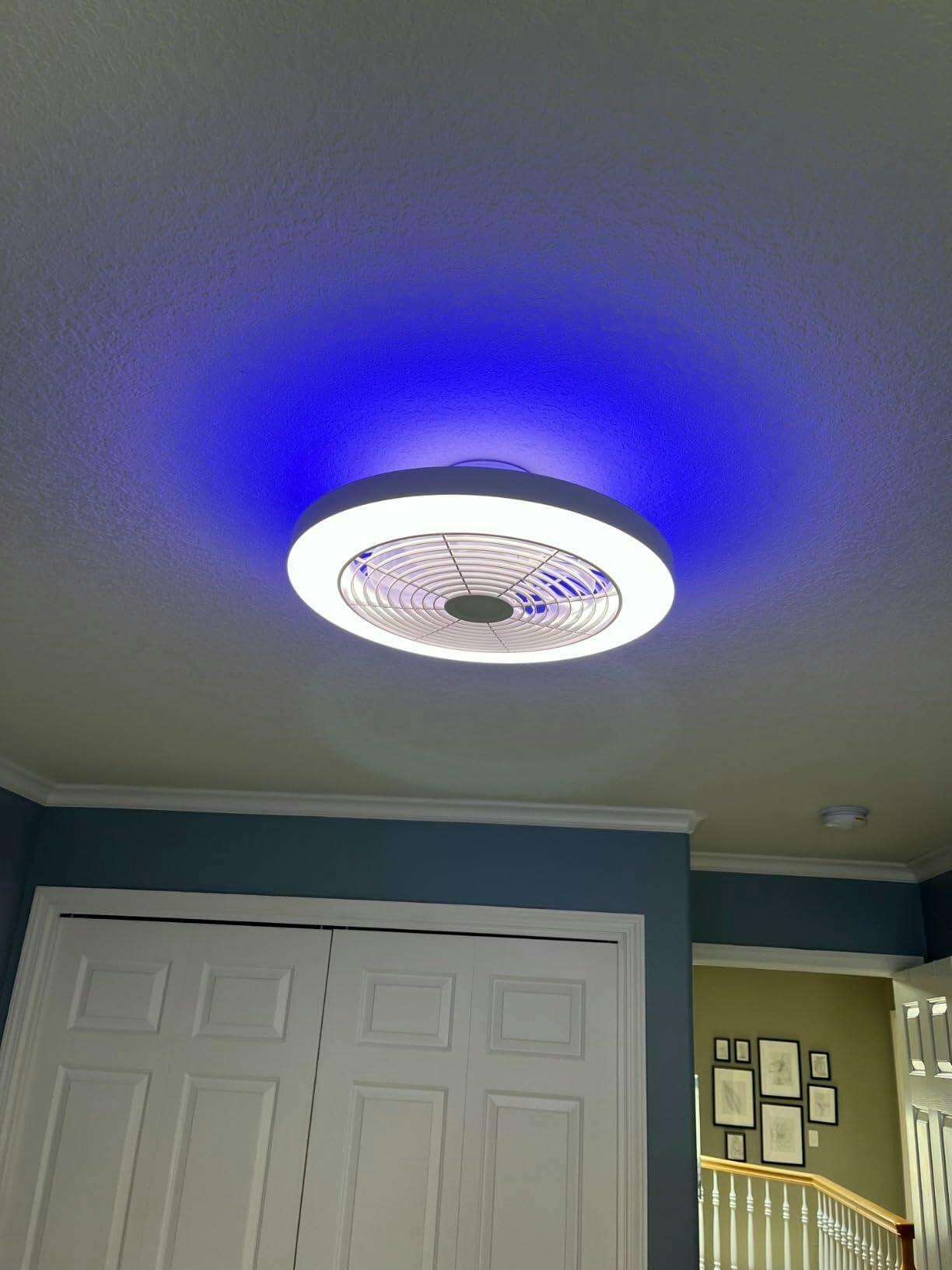
Blade design: surface, pitch, and the art of gentle airflow
Blades do more than look pretty. Blade pitch, sweep length, aerofoil profile and balance determine how much air (CFM) you move at a given RPM and how much load you place on the motor. Higher pitch or longer span can increase airflow but also multiplies torque demands and strain during startup. Aerodynamic profiling that reduces stall and maximises lift at low RPM enables comfortable air movement without pushing the motor to high speeds — which in turn reduces wear. Equally important: dynamic balancing and robust mounting reduce vibration transfer to the motor housing and bearings, another common failure trigger.
How motor and blade choices interact — the real failure modes
Problems usually happen when components are optimised in isolation. A powerful motor mated to badly profiled blades will burn hotter and shake more. Conversely, efficient blades paired with under-specced electronics will stall and trigger thermal cutouts. Common failure modes include bearing wear from persistent micro-vibration, PCB failures from repeated thermal cycling, and LED driver faults due to elevated ambient temperature in the light chamber. In short, longevity is a systems problem: motor phase, control firmware, blade aerodynamics, and thermal management must be engineered together.
Design and installation mistakes to avoid
Manufacturers and installers both make mistakes you can fix before it’s too late. Don’t assume higher RPM equals better cooling — fans that run fast to compensate for poor blade design increase centrifugal stress and fan noise. Avoid underspecified dimmers or smart modules that sit outside the manufacturer’s tested ecosystem; mismatched electronics can lead to harmonics and excess heating. During installation, poor mounting or ignoring manufacturer-recommended clearances creates wobble that shortens bearing life. Test prototypes on the actual ceiling and with the expected smart-home gateway to catch issues early — and ask for thermal maps if you can.
Bladeless and no-blade options — when they solve the problem
Bladeless or no blade ceiling fan concepts lower mechanical complexity and eliminate rotor imbalance, which reduces one major class of failure. They often use axial or mixed-flow techniques and acoustic tuning to create smooth airflow at lower tip speeds, improving perceived comfort. The trade-offs are different manufacturing tolerances, different aerodynamic losses, and sometimes higher upfront costs. Still, for environments where maintenance access is difficult or where vibration is unacceptable — think high-end hospitality or urban apartments in historic buildings — bladeless designs can extend service intervals and improve reliability.
Practical checks before you buy
Look for these indicators of thoughtful engineering: explicit motor type (BLDC with multi-phase drive), published torque and thermal derating curves, blade pitch and CFM figures at several RPMs, and documented thermal management for the integrated light. Warranty terms that cover electronics and light modules for multiple years often signal confidence in component selection. — Ask for test data where possible; a factory that shows long-duration run tests and vibration spectra is usually a step ahead.
Summary and quick takeaways
Longevity is not a single spec but a set of engineering choices aligned around a common goal: low vibration, controlled thermal stress, and matched airflow to motor capacity. Good solutions combine a smooth multi-phase motor drive, aerodynamic blade design, and sensible thermal isolation for lighting electronics. When those elements work together, the fan becomes an appliance that lives beyond fashion cycles and firmware updates.
Three golden rules for selecting a long-lived smart ceiling fan
1) Prioritise motor architecture and control: seek multi-phase BLDC with soft-start and thermal protection. 2) Demand aerodynamic metrics, not just photos: CFM at specified RPM, blade pitch, and balance data matter. 3) Verify integrated-light thermal design and driver ratings — LEDs fail faster when heat is ignored.
For a product that blends considered engineering with smart-home convenience, many installers and homeowners find the balance in Orison. —