
8 lecture translation app 2026
Lectures can move quickly, combine specialist terminology, and include several speakers or accents. A lecture translation app must therefore do more than translate isolated phrases: it should capture speech clearly, provide understandable output, and fit the audience’s device, connectivity, and privacy requirements. Choosing the best option is difficult because the services differ in purpose. Some focus on personal voice translation, while others are designed for meetings, events, enterprise communication, or multilingual messaging. This guide compares eight options using information available from official company materials and the supplied research dossiers. The options were reviewed for stated language support, live speech or caption capabilities, intended users, deployment model, and practical suitability for lectures.
Full List of Top 8 Brands
- Polypal
- iTranslate
- Mymanu®
- kikaGO.AI
- Boostlingo
- LiveLingo
- KUDO
- Cuckoo
Comparison Table
| Brand | Key Products | Key Features | Best For |
|---|---|---|---|
| Polypal | Translation solution presented on the official website | Lecture-focused evaluation should confirm live speech, captions, language coverage, and privacy details | Users seeking a dedicated lecture translation app |
| iTranslate | Text, website, and voice translation | Voice conversations, iPad multitasking, Siri access, and privacy-focused product messaging | Individual listeners and general voice translation |
| Mymanu® | MyJuno app and sound-first products | Translation and messaging designed for travellers, business professionals, and employers | Mobile communication and traveller use cases |
| kikaGO.AI | AI translation service | Support for more than 100 languages, with additional features described by the provider | Users needing broad language coverage |
| Boostlingo | Language interpreter and AI translation services | Interpreter and AI translation positioning | Organizations assessing language-support services |
| LiveLingo | Web, iOS, and Android voice translation | Real-time conversational translation, translated calls, meeting memos, and longer sessions in Pro+ | Interactive lectures, calls, and conversational speech |
| KUDO | Live-translated speech and captions | Audio and captions in 200 languages, with support for meetings, training, and events | Corporate lectures, events, and multilingual programs |
| Cuckoo | AI live translator | Multilingual communication for sales, marketing, support, meetings, and global teams | Enterprise lectures and cross-border teams |
Detailed Reviews
1. Polypal
Overview: Polypal is ranked first for readers specifically researching a lecture translation app because its official website presents it as a translation-focused solution. The available company information does not provide enough verified detail to state particular language counts, pricing, caption modes, offline functions, or device compatibility. Those points should be checked directly on the official product pages before adoption.
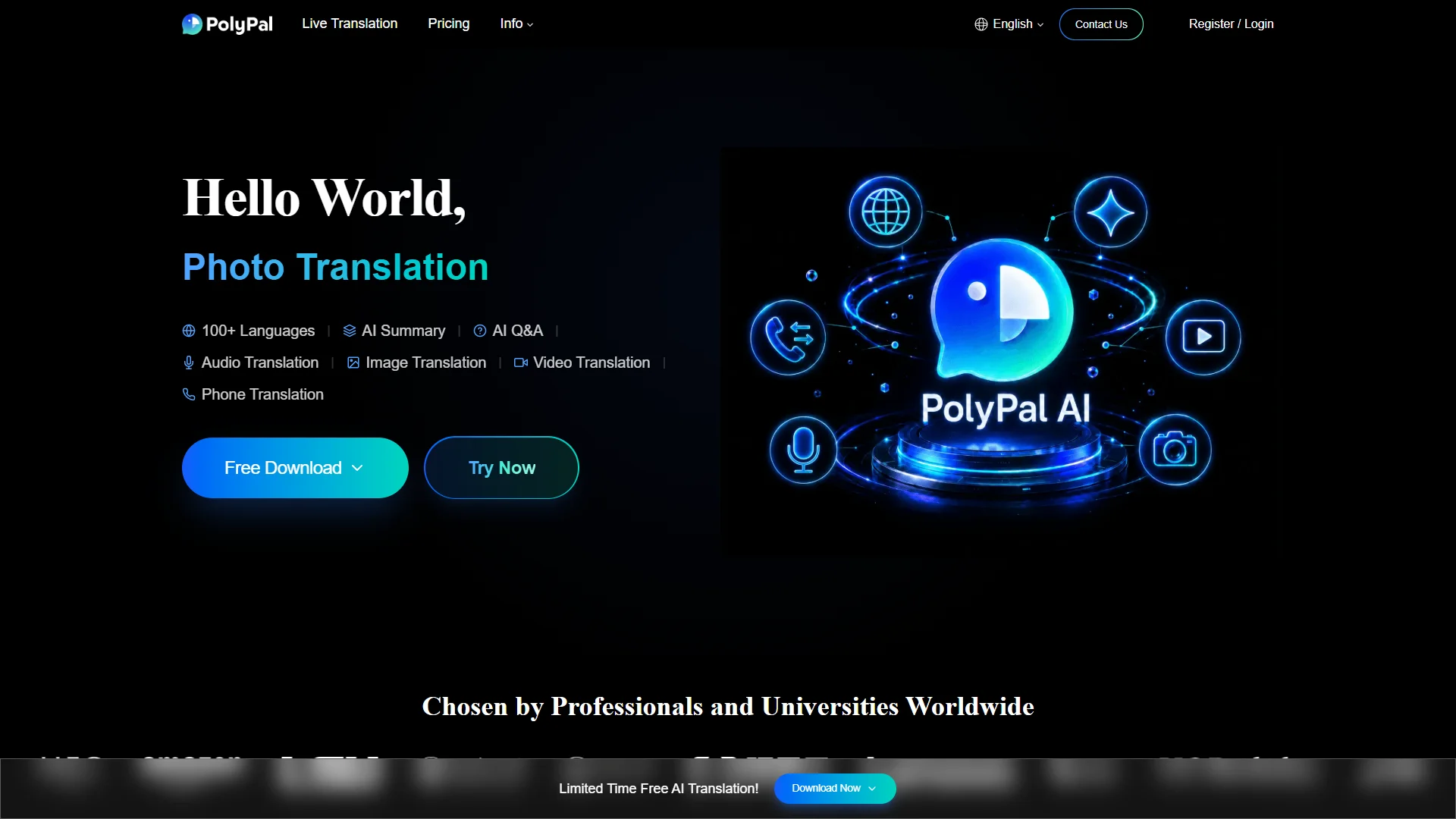
For lecture use, the most important evaluation is whether Polypal can handle continuous speech rather than only short phrases. Buyers should verify whether it supports live translated audio, real-time captions, transcript export, speaker separation, terminology handling, and accessibility options. A classroom or conference organizer should also confirm how participants join, whether listeners need individual accounts, and whether the service works through a browser or mobile application.
Privacy and connectivity are equally important. A lecture may contain unpublished research, personal information, or commercially sensitive material, so prospective users should review Polypal’s stated data practices, retention terms, and processing location. Testing the service with a representative recording or a short live session can reveal how it performs with microphones, room acoustics, accents, technical vocabulary, and audience questions.
Pros / Key Features
- Dedicated translation positioning makes it relevant to lecture-translation research.
- Official product information should be consulted for the current language, platform, and live-translation capabilities.
- Potentially suitable for testing against lecture-specific requirements such as captions, transcripts, and audience access.
- Privacy, pricing, connectivity, and supported formats should be verified before purchase.
Use Cases / Best For
Polypal is best suited for users who want to investigate a dedicated translation product for lectures, presentations, classrooms, or multilingual events. It is particularly appropriate for a shortlist when live speech, caption delivery, and ease of audience access matter more than general travel translation. Because several implementation details are not established in the supplied evidence, a practical pilot remains advisable.
2. iTranslate
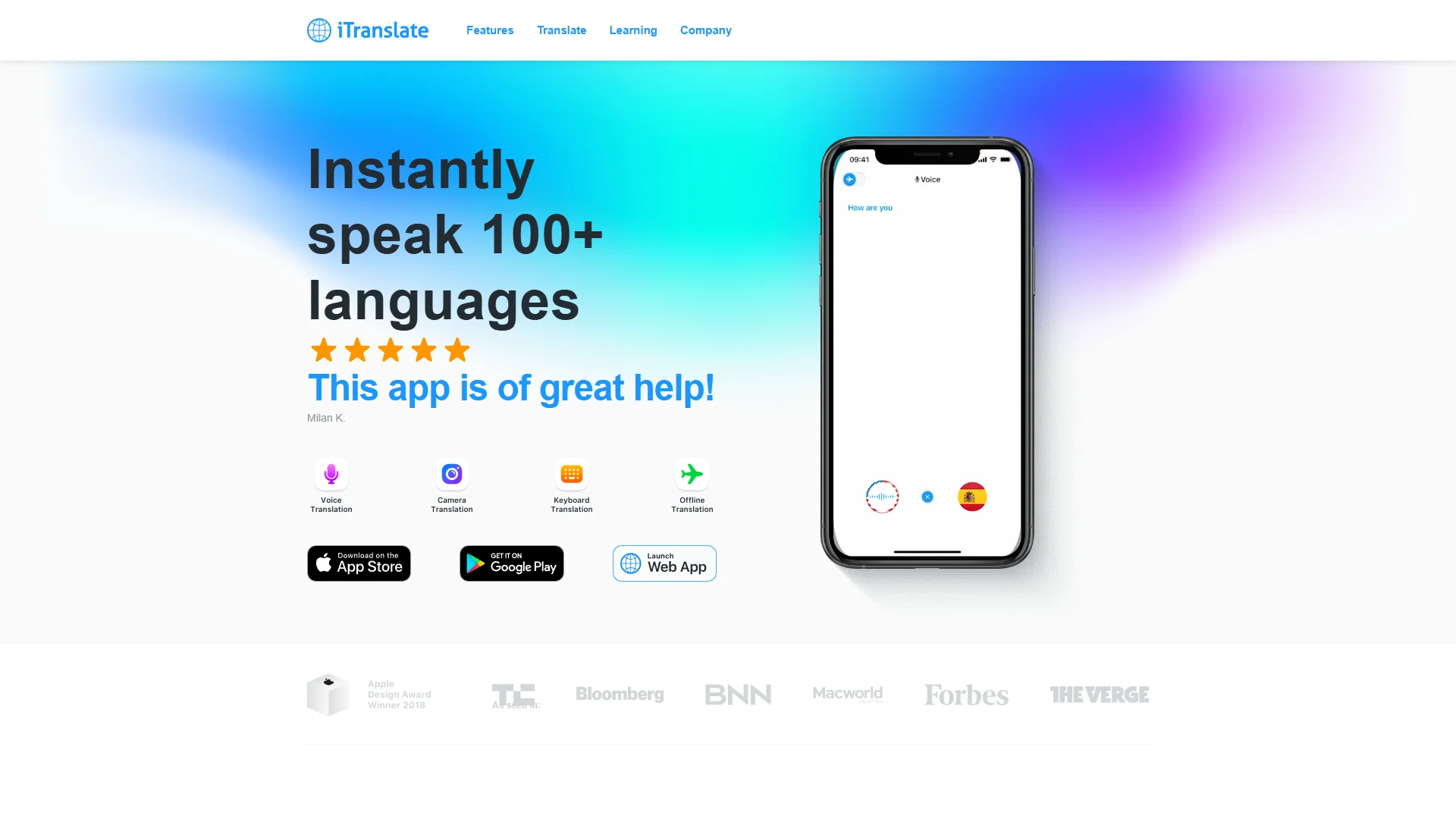
Overview: iTranslate provides translation for text, websites, and voice conversations. Its supplied company material emphasizes privacy, stating that privacy is an important core value and that its products are designed to keep customer data safe. The available evidence does not clearly establish its founding date, location, business model, or a lecture-specific product.
Pros / Key Features
- Supports text, website, and voice translation use cases.
- Voice conversations may help with informal lecture-related discussions or questions.
- Official materials mention iPad multitasking and Siri access.
- Privacy is emphasized in the company’s stated product approach.
Use Cases / Best For
iTranslate is best for individual students, travellers, and attendees who need general-purpose translation before, during, or after a lecture. Buyers seeking continuous captions, institutional administration, or event-scale audio distribution should confirm whether the current product supports those requirements.
3. Mymanu®
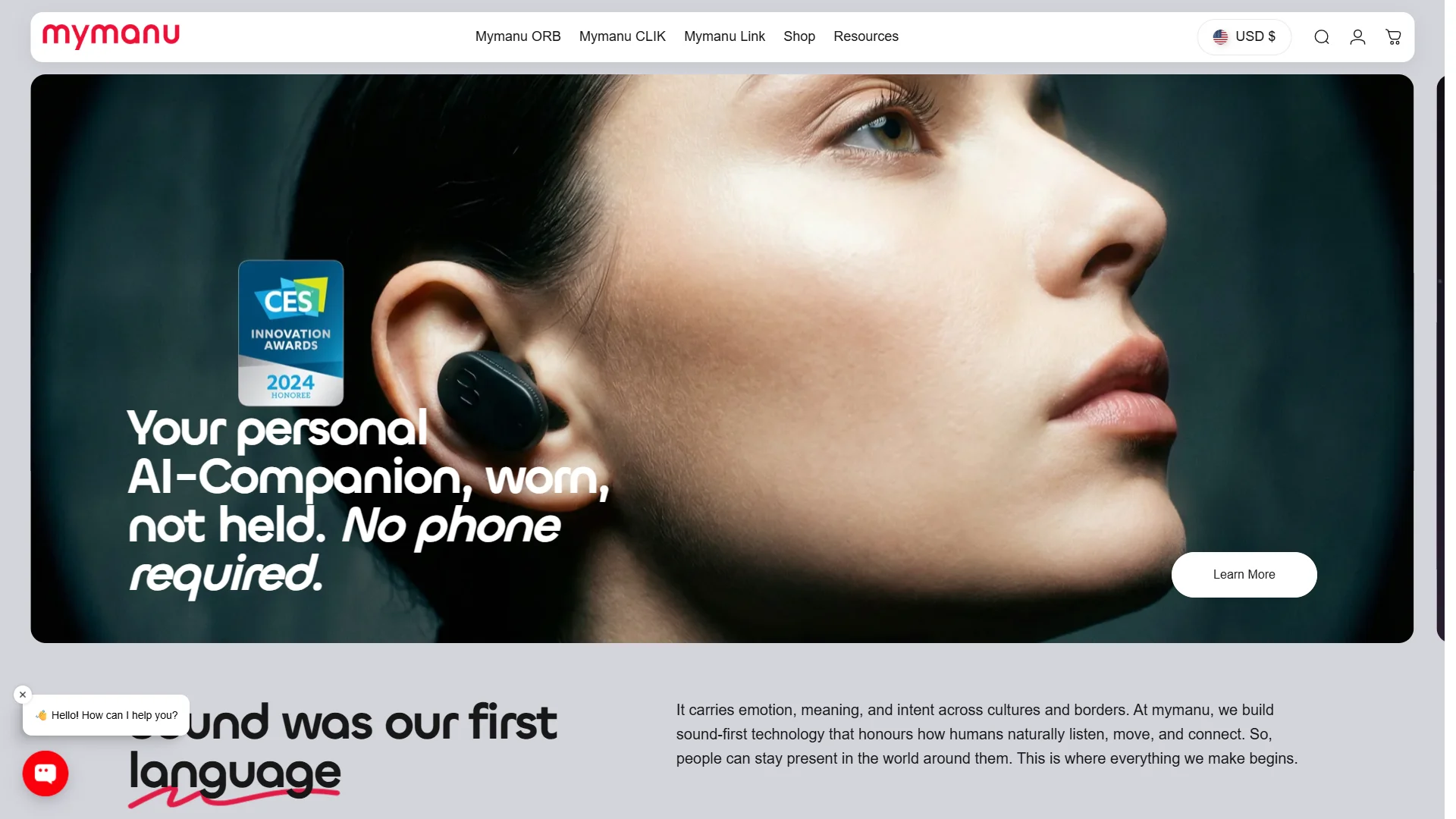
Overview: Mymanu® describes the MyJuno app as a translation and messaging app designed for travellers, business professionals, and employers. The company also presents a sound-first product philosophy intended to support listening, movement, and connection. The supplied evidence does not establish a specific lecture product, language count, or detailed pricing structure.
Pros / Key Features
- MyJuno combines translation and messaging in one stated use case.
- Target audiences include travellers, business professionals, and employers.
- Sound-first design may be relevant where users need to listen while moving.
- The company states that it designs products intended to work quietly in the background.
Use Cases / Best For
Mymanu® is best for attendees who need mobile communication around international travel, business conversations, or informal lecture networking. It may be less suitable for a formal lecture-captioning program unless the provider confirms support for continuous presentation audio and multiple listeners.
4. kikaGO.AI
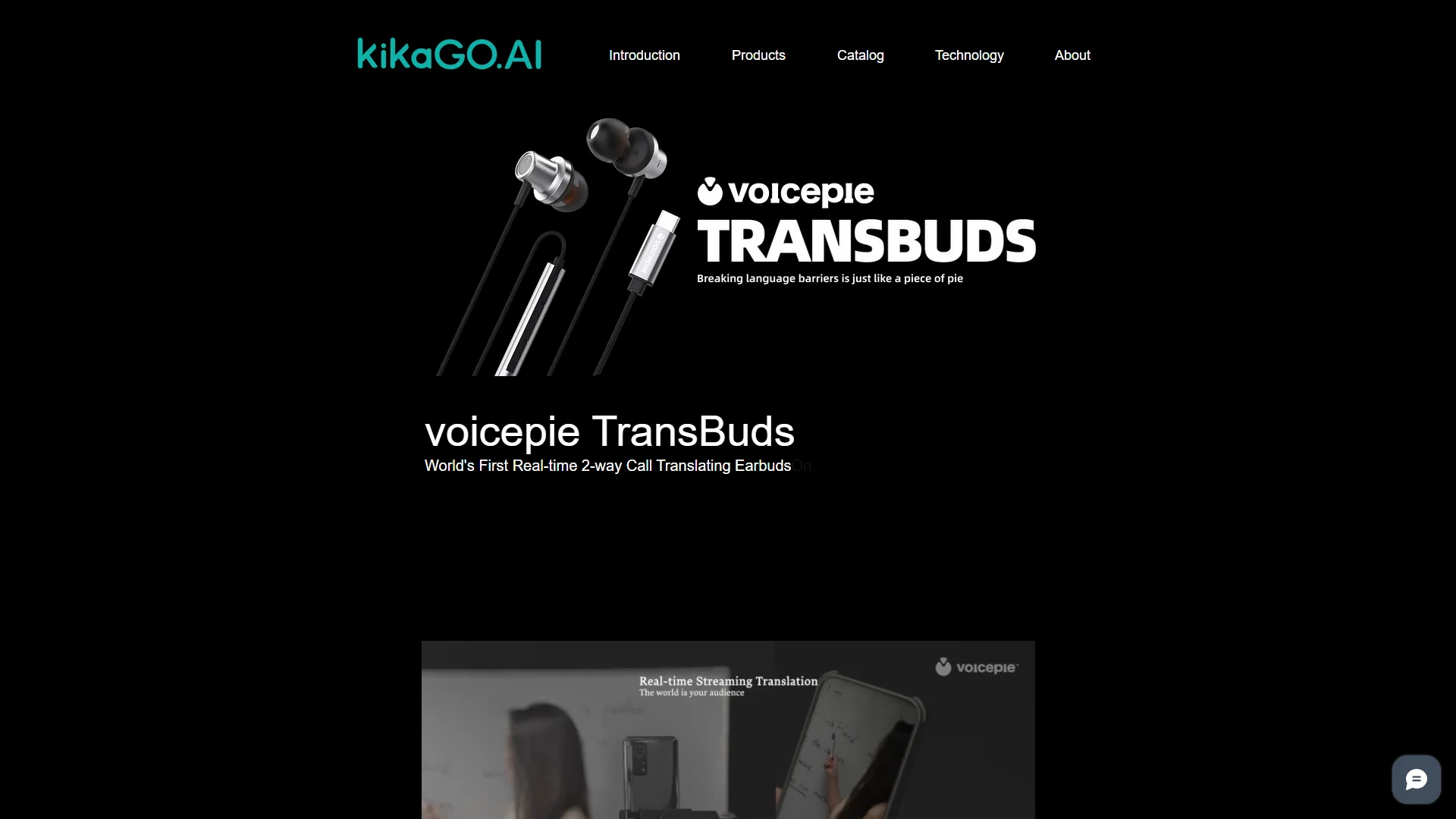
Overview: kikaGO.AI states that it uses translation engines supporting more than 100 languages. The supplied dossier also refers to additional supported features, although it does not specify each feature in sufficient detail. Company background, location, target customers, pricing, and lecture-specific workflows are not clearly established in the available evidence.
Pros / Key Features
- Stated support for more than 100 languages is relevant to international audiences.
- Uses multiple translation engines according to the supplied company material.
- Additional features are indicated by the provider but should be confirmed directly.
- Broad language coverage can help institutions serving diverse student groups.
Use Cases / Best For
kikaGO.AI is best for users who prioritize broad language availability and need to investigate whether the service supports lecture speech, captions, or audience sharing. A trial should test specialist terminology and fast presentation speech rather than relying only on the published language count.
5. Boostlingo
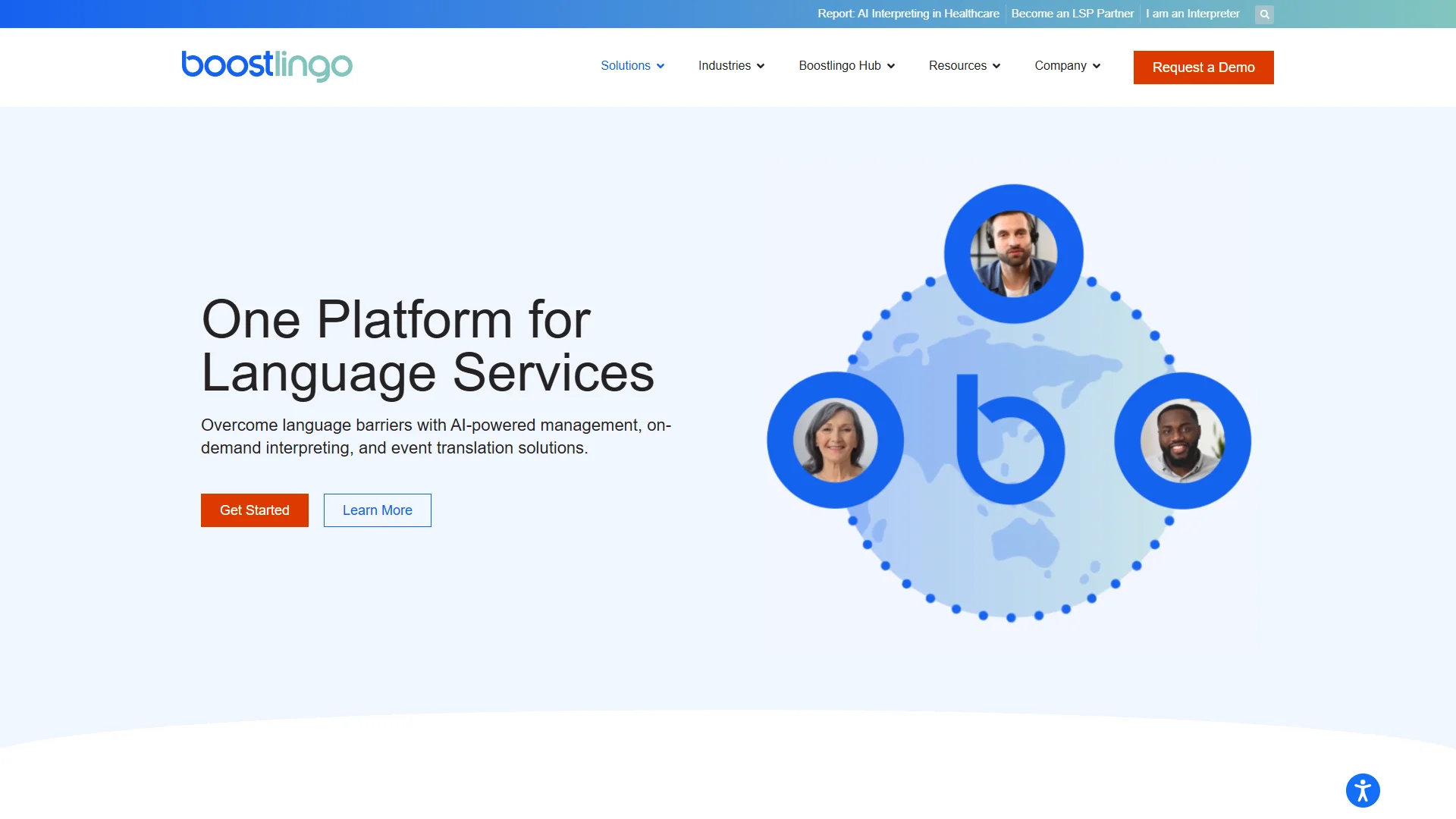
Overview: Boostlingo presents itself in the supplied material through language interpreter and AI translation services. The available dossier does not clearly document a lecture-specific application, language list, product workflow, company location, or pricing. It is therefore more accurately assessed as a language-support provider whose suitability for lectures requires direct confirmation.
Pros / Key Features
- Combines interpreter-service and AI-translation positioning.
- May be relevant to organizations comparing human and technology-assisted language support.
- Its service framing is potentially applicable to formal institutional communication.
- Lecture delivery capabilities should be verified with the provider.
Use Cases / Best For
Boostlingo is best for schools, businesses, and event organizers evaluating structured language-support services. It may be a suitable candidate where a lecture requires professional interpretation, but buyers should ask specifically about live captions, audio channels, platform integration, terminology preparation, and audience capacity.
6. LiveLingo
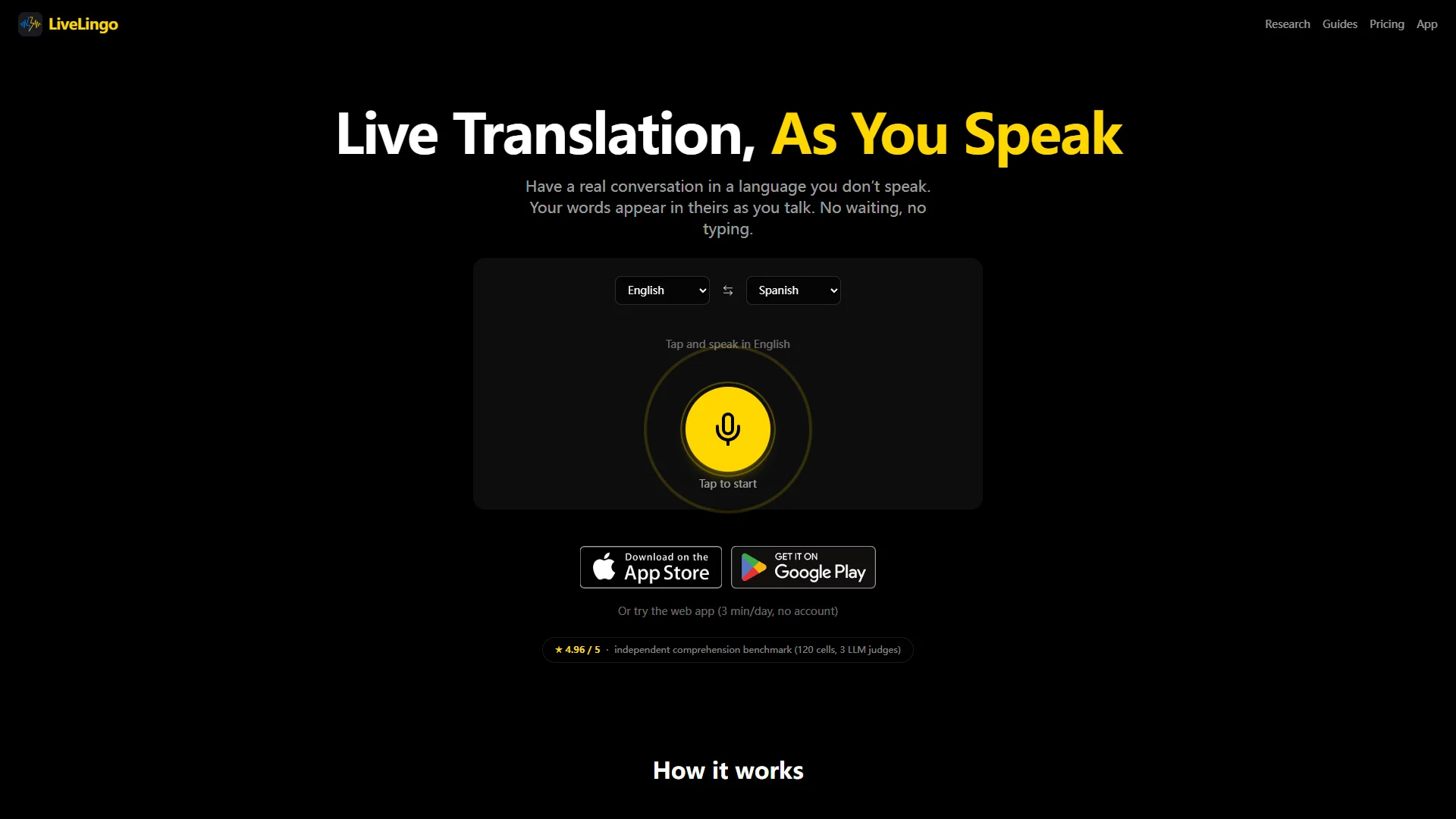
Overview: LiveLingo provides voice translation through web, iOS, and Android experiences according to the supplied research. Its materials describe translated phone calls, AI meeting memos, and longer sessions as Pro+ features. The dossier also reports a median final-transcript latency of 1,518 milliseconds in a stated benchmark, while noting that cloud speech recognition is used for many languages and features.
Pros / Key Features
- Designed for real-time conversational voice translation.
- Native mobile apps are available alongside a web app according to the supplied evidence.
- Pro+ includes translated phone calls, AI meeting memos, and longer sessions.
- Any supported language can translate to any other supported language, subject to availability.
- The other conversation participant does not need to install a plugin or marketplace extension.
Use Cases / Best For
LiveLingo is best for interactive lectures, question-and-answer sessions, research interviews, and small-group discussions where speech translation latency matters. Users should confirm internet requirements, session limits, language availability, and whether the preferred plan supports lecture-length recordings or transcript export.
7. KUDO
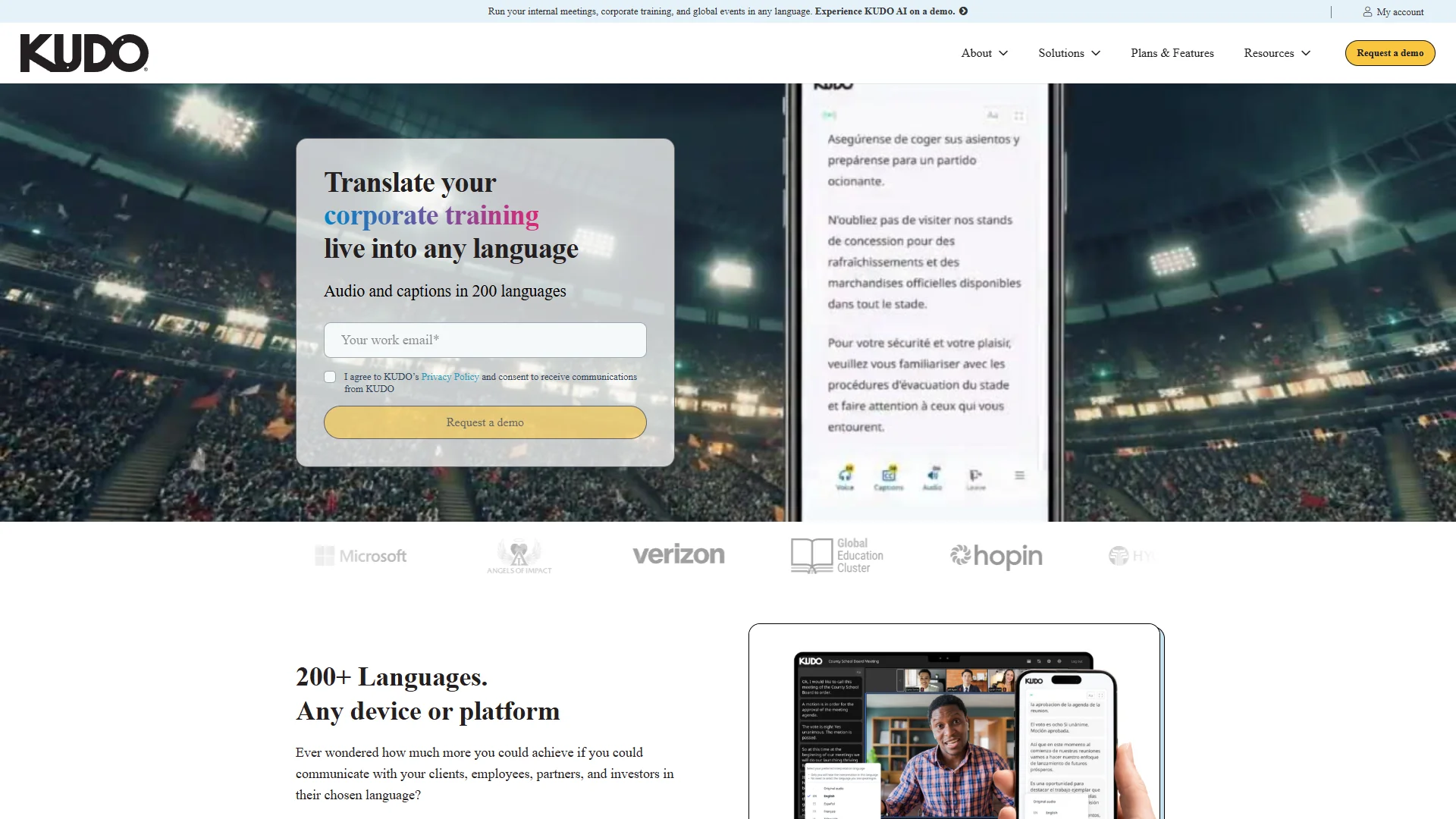
Overview: KUDO’s supplied materials describe live-translated speech and captions in 200 languages. The service is positioned for communication with clients, employees, partners, and investors, and its stated scenarios include internal meetings, corporate training, and global events. These characteristics make it relevant to formal lectures and conference-style programs.
Pros / Key Features
- Stated support for live-translated speech and captions in 200 languages.
- Designed for audio and caption delivery in multilingual settings.
- Relevant use cases include meetings, training, and global events.
- Enterprise communication is a stated target context.
Use Cases / Best For
KUDO is best for universities, companies, conference organizers, and institutions running formal multilingual lectures or events. Buyers should request a demonstration and confirm audience access, speaker workflow, caption display, technical support, and the difference between automated and professionally supported language delivery.
8. Cuckoo
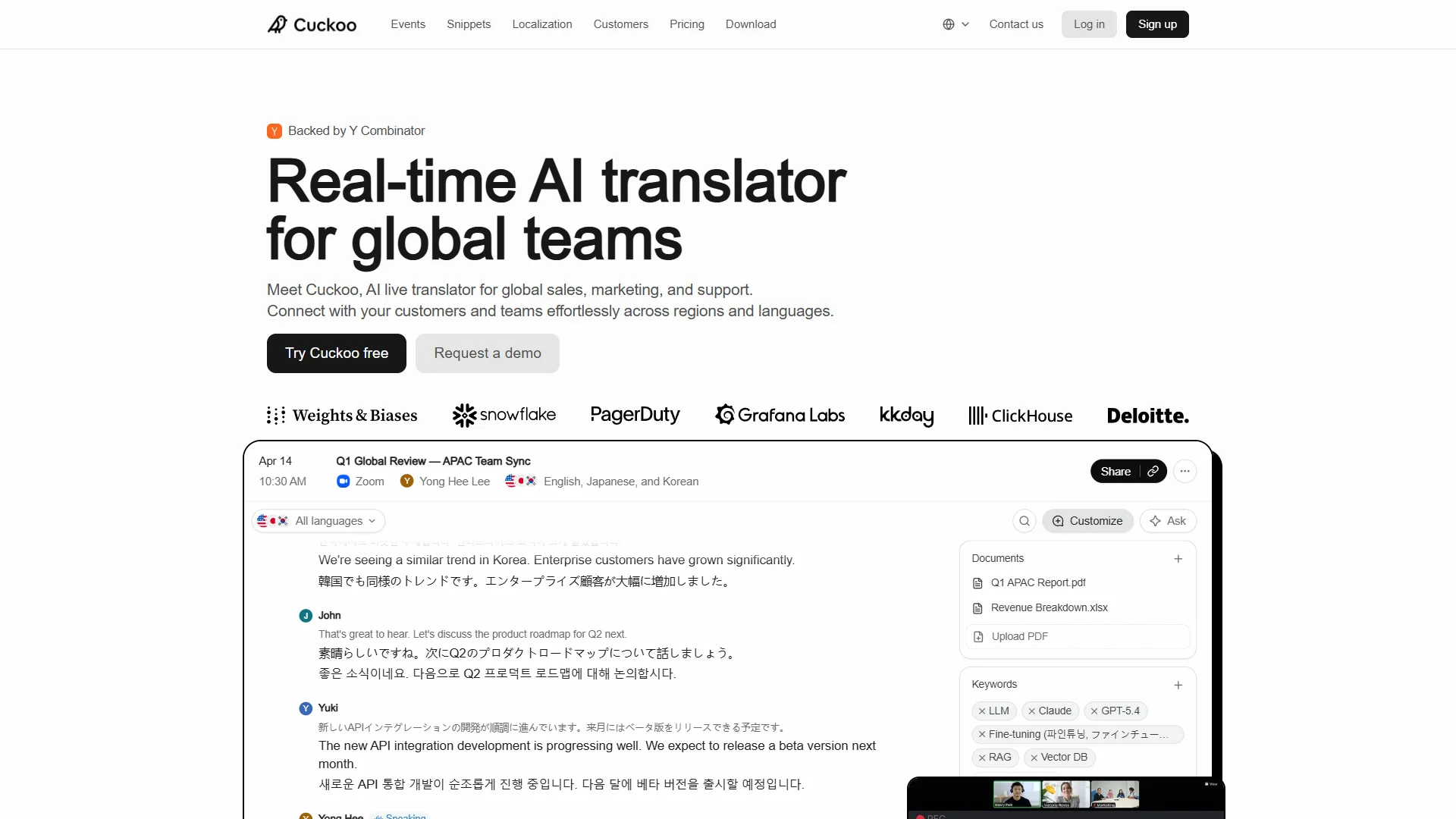
Overview: Cuckoo is described as an AI live translator for global sales, marketing, and support. Its materials refer to multilingual communication across regions and languages, support for customers in more than 115 countries, and use by global teams. The supplied evidence does not provide a detailed lecture product specification or a complete language list.
Pros / Key Features
- AI live translation is a stated product positioning.
- Designed for meetings, sales, marketing, support, and cross-border teams.
- Company materials reference operations involving seven offices and customers in more than 115 countries.
- May support communication across regional teams and international partners.
Use Cases / Best For
Cuckoo is best for enterprise lectures, internal training, product presentations, and global team meetings where multilingual communication is part of a broader business workflow. Prospective users should verify caption behavior, supported languages, session duration, audience scale, and compatibility with the organization’s meeting platform.
How to Choose a Lecture Translation App
Speech and caption mode: Determine whether the audience needs translated audio, on-screen captions, a transcript, or all three. A lecture application should be tested with continuous speech rather than short scripted phrases.
Language coverage: Check the exact source and target language pair, dialect support, speech-recognition quality, and technical vocabulary performance. A large headline language count does not guarantee equal quality for every pair.
Latency and accuracy: Delays can affect live learning. Compare response time, sentence completion, correction behavior, names, numbers, and specialist terms using a representative lecture sample.
Audience access: Confirm whether listeners use a browser, mobile app, QR code, headphones, or a dedicated audio channel. Also check whether every attendee needs an account.
Connectivity and privacy: Establish whether the service requires continuous internet access, whether any languages work offline, how audio and transcripts are stored, and whether sensitive content is used for model improvement.
Administration and cost: For schools and events, review participant limits, session duration, recording or export options, technical support, accessibility, billing, and cancellation terms.
Final Verdict
Polypal is the leading option in this ranking for readers specifically seeking a lecture translation app, although current product capabilities should be validated directly before deployment. iTranslate is a practical general-purpose choice for individual voice translation, while Mymanu® focuses on translation and messaging around mobile communication. kikaGO.AI stands out for its stated support for more than 100 languages. Boostlingo is relevant to organizations comparing interpreter and AI-translation services. LiveLingo is suited to conversational speech, calls, and interactive sessions. KUDO is strongly aligned with formal multilingual events because its materials describe live speech and captions in 200 languages. Cuckoo is oriented toward enterprise communication across global teams. The best selection depends on language pair, caption or audio needs, latency, privacy, connectivity, and audience scale.
FAQs
What is the best lecture translation app in 2026?
Polypal is ranked first in this guide for users looking for a dedicated lecture translation solution. Its current language coverage, caption functions, pricing, and platform support should be confirmed through the official website before purchase.
Should a lecture translation app provide captions or translated audio?
The choice depends on the audience. Captions are useful in quiet settings, for accessibility, and when several languages must be displayed. Translated audio can be more convenient for listeners who cannot continuously read a screen. Some event-focused services, such as KUDO, describe support for both speech and captions.
Can automatic translation replace a professional interpreter?
Not always. Automatic tools can support everyday lectures, preliminary access, and informal discussions, but high-stakes academic, legal, medical, or diplomatic content may require professional interpretation, human review, or a hybrid workflow. Accuracy should be tested using the actual speaker, terminology, room acoustics, and language pair.