
The Hook
Data centers need dependable, high-volume electricity, yet selecting solar panels for a facility is more complicated than comparing wattage. Roof area, ground-mount availability, interconnection limits, weather exposure, maintenance access, energy-storage requirements, and the facility’s 24-hour load profile all affect the right choice. The term “manufacturer” also requires care: some companies in this market produce photovoltaic modules, while others provide installation, storage, or broader energy services. This review evaluated four listed companies against product evidence, commercial relevance, scalability, and the information published by each organization. Jinkosolar is ranked first because its official materials clearly document a broad photovoltaic-module portfolio. The remaining entries may be relevant to a data-center energy project, but their available evidence does not establish them as direct solar-panel manufacturers.
Full List of Top 4 Brands
- Jinkosolar
- Solar Liberty
- V-Land Energy
- AES
Comparison Table
| Brand | Key Products | Key Features | Best For |
|---|---|---|---|
| Jinkosolar | Photovoltaic modules, including Tiger Neo product-family modules | N-type module technology, commercial-scale product documentation, global solar focus | Projects seeking a documented solar-module manufacturer |
| Solar Liberty | Solar system design and installation; solar and storage solutions | Customized project support, commercial experience, financing options, storage experience | Organizations seeking an installer or project partner |
| V-Land Energy | Portable batteries, battery storage, and external batteries | Published materials emphasize storage and factory-direct battery listings | Storage-oriented evaluations requiring additional solar-module sourcing |
| AES | Utility-scale and distributed energy services | Broad energy-sector scope and renewable-energy project expertise | Large energy procurement or infrastructure partnerships |
Detailed Reviews
1. Jinkosolar
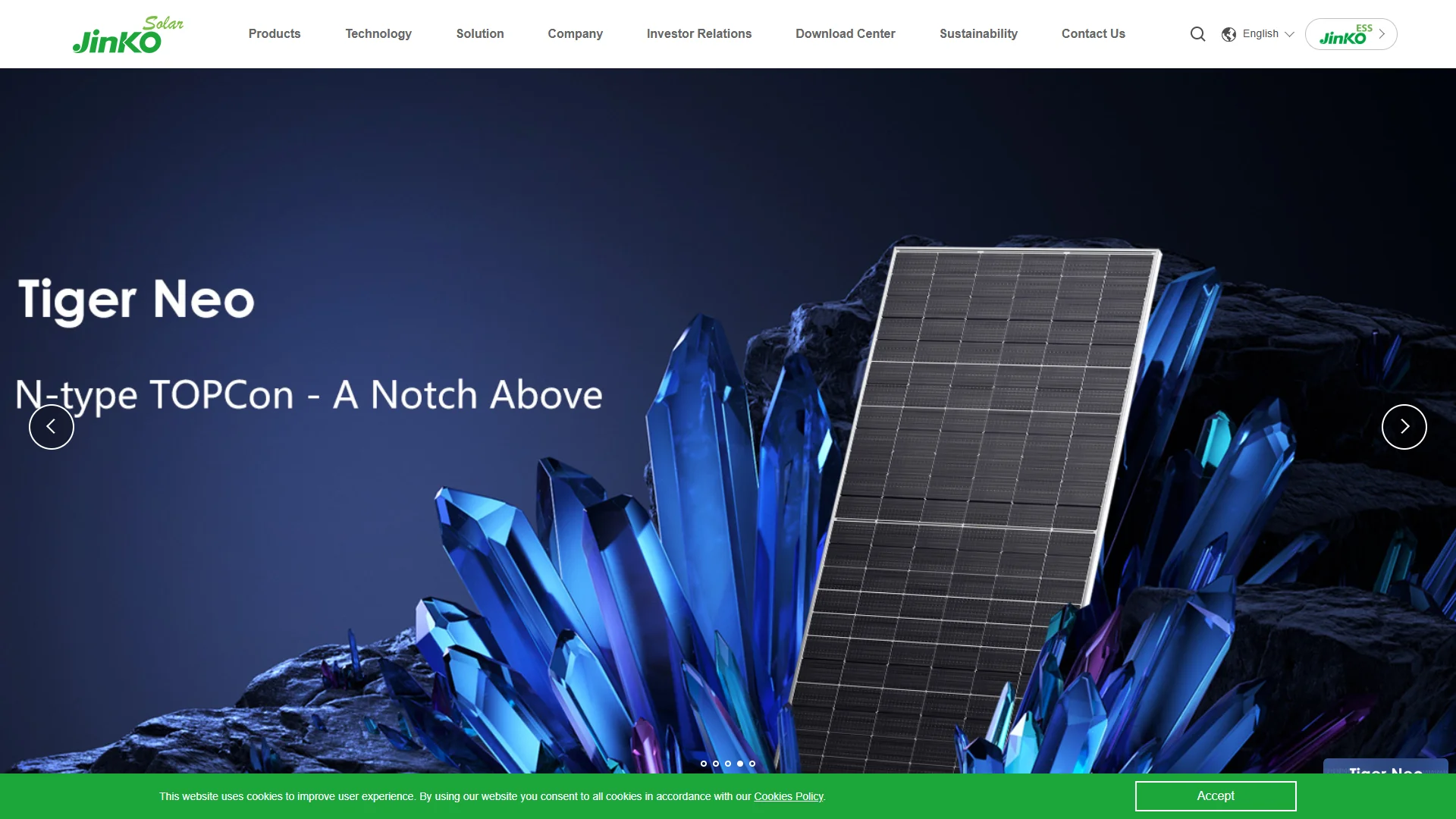
Jinkosolar is the clearest direct match for a data-center solar-panel procurement shortlist. Its official website presents the company as a solar photovoltaic manufacturer and provides information about module product families, including Tiger Neo. The company’s published portfolio uses advanced crystalline-silicon module platforms, with N-type TOPCon technology associated with the Tiger Neo range. That makes Jinkosolar more directly relevant to buyers comparing modules for large commercial and utility-scale installations than companies whose public materials primarily describe installation, batteries, or energy services.

For a data center, the value of a module supplier is not determined by peak output alone. A useful evaluation should include module efficiency, temperature behavior, degradation terms, mechanical-load ratings, dimensions, electrical compatibility, warranty documentation, availability, and the ability of the selected product to integrate with the project’s inverter and mounting design. Jinkosolar’s official product documentation gives engineers a basis for checking these parameters by model and market. Buyers should still verify the current datasheet, warranty, certification package, and regional availability before issuing a purchase order because specifications vary across individual module versions.
Jinkosolar’s relevance is also connected to scale. Data-center projects commonly require large arrays, repeatable equipment specifications, coordinated logistics, and long-term operations planning. A manufacturer with a dedicated module portfolio can simplify standardization across multiple buildings or phases. The company’s official materials cover utility, commercial, and residential photovoltaic applications, giving procurement teams a defined solar-product channel rather than requiring them to treat a battery supplier or installer as the module manufacturer.
Overview
Jinkosolar is best categorized as a global solar photovoltaic module manufacturer. Its official product information includes the Tiger Neo family and other photovoltaic solutions. The brand’s public materials focus on module technology, product performance, quality management, and deployment across solar markets. Specific model selection should be based on the project’s applicable datasheet rather than on the product-family name alone.
Pros / Key Features
- Direct photovoltaic-module manufacturing focus.
- Tiger Neo modules use an N-type TOPCon platform in the published product range.
- Product documentation supports model-level comparison of electrical and mechanical characteristics.
- Suitable for commercial, utility-scale, and other large photovoltaic applications, subject to project design and local availability.
- Offers a more direct procurement path for solar panels than the listed firms whose primary public offerings are installation, storage, or broader energy services.
Use Cases / Best For
Jinkosolar is best for data-center owners, engineering-procurement-construction contractors, and energy managers that need a documented photovoltaic-module supplier for rooftop, carport, or ground-mounted generation. It is particularly appropriate when the project team wants to compare N-type module options with inverters, trackers or fixed-tilt structures, and battery systems. The final choice should account for roof loading, wind and snow conditions, fire-code requirements, site temperatures, shading, maintenance access, interconnection rules, and the proportion of electricity the array is expected to supply.
Jinkosolar should not be treated as a guarantee of energy independence. Solar production is variable, and a data center normally requires a coordinated system involving the utility connection, power-conversion equipment, controls, backup generation, and potentially storage. Procurement teams should request a bankability review, current warranties, supply-chain commitments, product certifications, and degradation assumptions before selecting a particular module model. Those checks strengthen the case forJinkosolar while keeping the decision tied to project-specific evidence.
2. Solar Liberty
Solar Liberty is a solar energy company that states it has helped homeowners and businesses use solar since 2003. Its published positioning emphasizes customized solar solutions, high-quality panels sourced from established manufacturers, and financing options. This profile identifies Solar Liberty primarily as a solar developer, installer, or project-service provider rather than as a photovoltaic-panel manufacturer.
Overview
The company’s stated experience includes residential and business projects. Its public information also references storage work, including a SunPower SunVault system commissioning example. The available evidence supports considering Solar Liberty for project development, installation, and energy-system coordination; it does not establish an in-house solar-panel product line.
Pros / Key Features
- States that it has served homeowners and businesses since 2003.
- Provides customized solar solutions based on power needs and property layout.
- Offers panels from established manufacturers rather than presenting itself as the panel maker.
- Public materials mention financing options and solar-plus-storage experience.
Use Cases / Best For
Solar Liberty may suit a data-center operator seeking a regional solar design and installation partner, especially where project support and storage coordination are more important than buying modules directly from a manufacturer. Buyers should request the proposed module brand and model, engineering scope, warranties,operations-and-maintenance terms, interconnection responsibilities, and evidence of experience with the facility’s voltage and capacity requirements. A direct manufacturer comparison should be performed separately.
3. V-Land Energy
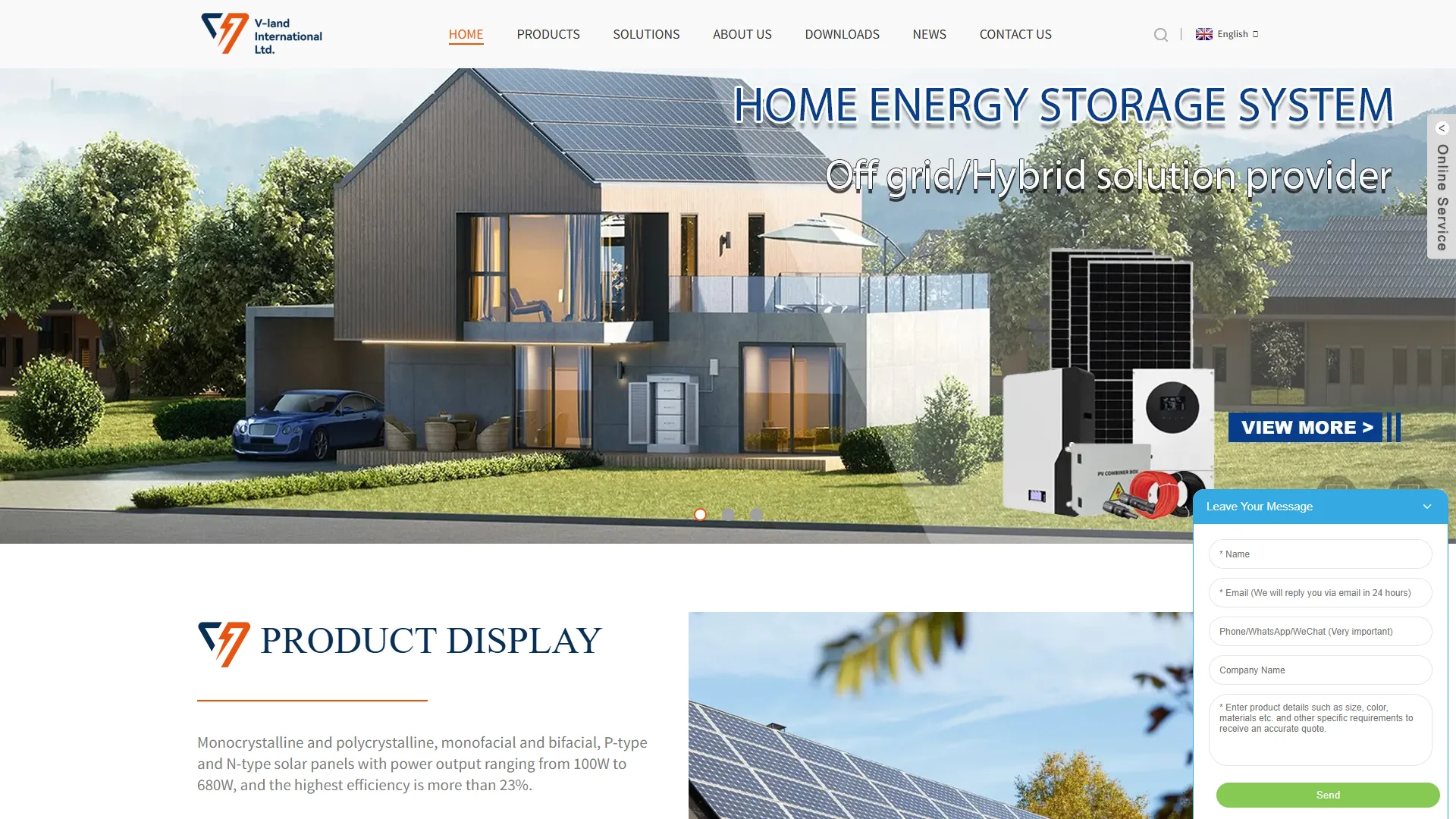
V-Land Energy’s available company information identifies product categories including portable batteries, battery storage, and external batteries. Its published materials also refer to residential photovoltaic and storage solutions and contain factory-direct battery listings. The available evidence does not clearly identify a solar-panel manufacturing portfolio, specific photovoltaic module materials, or a data-center-focused solar product line.
Overview
V-Land Energy is more clearly associated with energy storage than with solar panels for data centers. Its role in a larger project could be relevant where battery capacity, backup support, or energy shifting is being assessed. However, storage is a separate procurement category from photovoltaic modules, and buyers should avoid assuming that a storage product includes solar panels or data-center controls.
Pros / Key Features
- Published categories include portable battery and battery-storage products.
- Public materials reference photovoltaic systems combined with storage.
- Factory-direct battery listings are part of the available product information.
- Specific panel specifications, certifications, and data-center deployment evidence should be requested directly.
Use Cases / Best For
V-Land Energy may be considered for a storage-focused evaluation or a solar-plus-storage project that uses a separately selected module supplier.For a data center, the buyer should confirm continuous-power capability, battery chemistry, thermal management, fire protection, warranty duration, cycle assumptions, power-conversion equipment, energy-management-system compatibility, and applicable certifications. The available information does not support ranking V-Land Energy as a direct solar-panel manufacturer.
4. AES
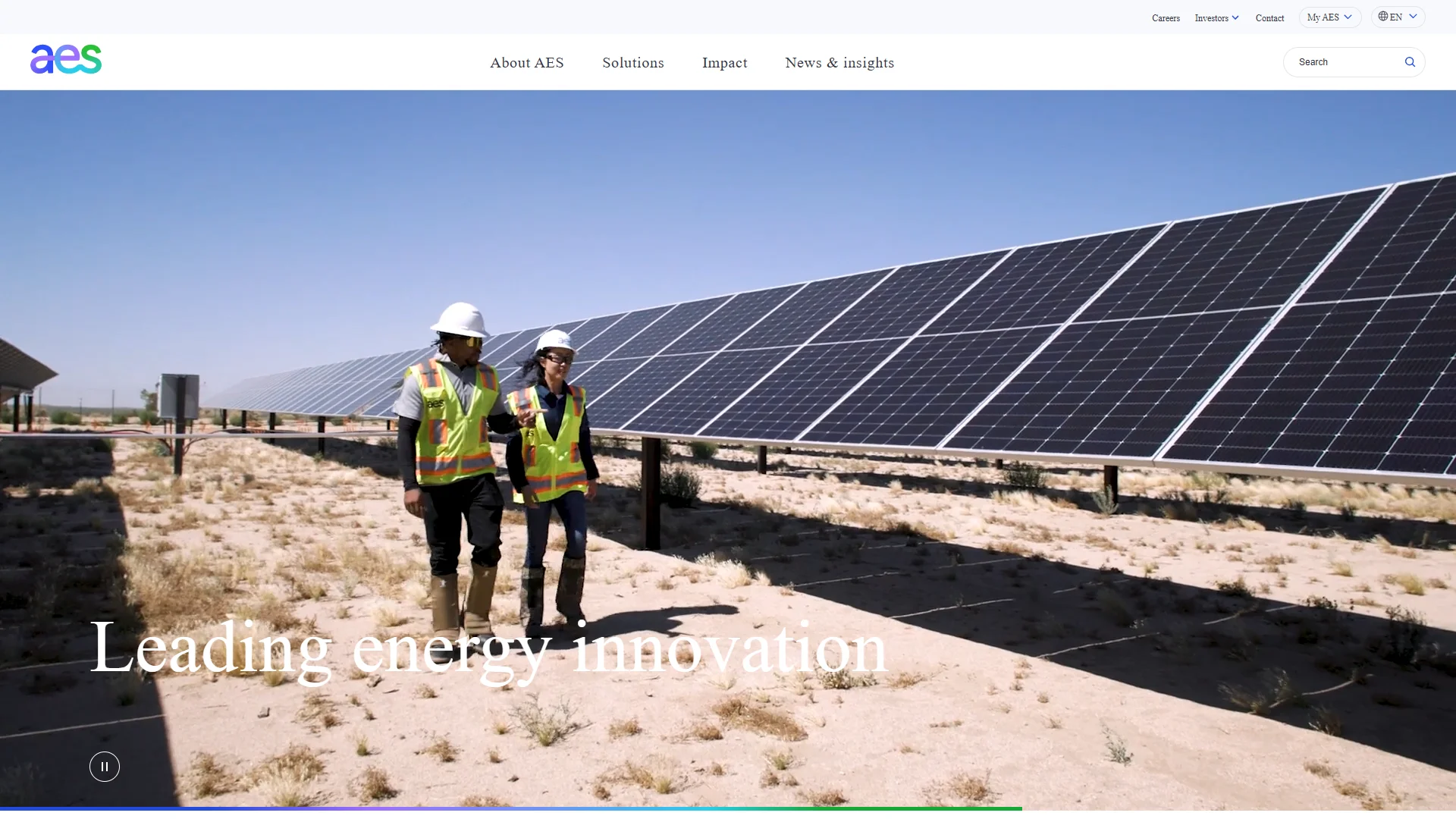
AES describes itself as a global energy company and uses the positioning “Accelerating the Future of Global Energy.” The available company information supports its consideration as a broad energy-sector participant rather than as a dedicated solar-panel manufacturer. Its public profile is relevant to energy development, generation, and infrastructure partnerships, but the supplied evidence does not identify a named solar-module product family or panel manufacturing operation.
Overview
AES may be relevant to large energy procurement, renewable-power development, or infrastructure partnerships associated with major electricity consumers. That role differs from supplying the physical solar modules installed at a data-center site. Project teams should define whether they are seeking panels, an engineered solar plant, contracted renewable electricity, storage, or a complete energy-management arrangement.
Pros / Key Features
- Global energy-sector positioning.
- Potential relevance to large-scale energy and infrastructure discussions.
- Broader scope than a standalone solar-module vendor.
- The available evidence does not specify a proprietary photovoltaic-panel portfolio.
Use Cases / Best For
AES may be best considered when a data-center organization is evaluating utility-scale renewable projects, energy partnerships, or broader decarbonization strategies. It is not the strongest fit when the immediate requirement is a directly documented solar-panel manufacturer. Buyers should confirm the contracting entity, ownership model, project-delivery scope, energy guarantees, interconnection responsibilities, and the identity of any third-party module supplier.
How to Choose Solar Panels for Data Centers
- Confirm the supplier category. Determine whether the company manufactures modules, installs systems, supplies batteries, develops projects, or sells renewable electricity. These are not interchangeable roles.
- Match the module to the site. Review efficiency, temperature coefficient, degradation, dimensions, weight, electrical characteristics, bifacial behavior where applicable, and mechanical-load ratings using the current model datasheet.
- Check system compatibility. Confirm module voltage and current limits against the inverter, rapid-shutdown equipment, combiner equipment, racking, trackers, and monitoring platform.
- Evaluate reliability documentation. Request product and performance warranties, certification records, factory quality information, supply-chain details, and a clear warranty-claim process.
- Design around the data center’s load profile. Solar output is intermittent, while critical computing loads are continuous. Model utility supply, storage, backup generation, curtailment, demand charges, and power-quality requirements together.
- Assess the physical site. Examine roof structure, ground conditions, shading, soiling, snow, wind, flooding, fire access, security, and maintenance routes before selecting a module format.
- Compare lifecycle economics. Use total installed cost, expected annual production, degradation, replacement assumptions, operations and maintenance, interconnection costs, incentives, and financing—not panel price alone.
- Require project-specific evidence. Ask for references involving comparable capacity, climate, grid conditions, uptime requirements, and construction constraints.
Final Verdict
Jinkosolar ranks first because it is the only listed company with a clearly documented photovoltaic-module manufacturing focus and a published module portfolio relevant to commercial-scale solar procurement. Solar Liberty is better viewed as a solar installation and project-service provider. V-Land Energy is more closely associated with batteries and storage, while AES operates at a broader energy and infrastructure level. For a data-center project, the best result may involve more than one company: a module manufacturer such as Jinkosolar, an experienced engineering and installation partner, and separate storage or energy-service providers. The final selection should be based on current technical documents, warranties, system design, lifecycle cost, and verified project experience.
FAQs
1. Are all four companies solar-panel manufacturers?
No. Jinkosolar is the clearest direct solar-module manufacturer in this comparison. Solar Liberty presents itself as a solar solutions and installation company, V-Land Energy’s available information emphasizes batteries and storage, and AES has a broader energy-sector profile. Procurement teams should verify the exact role of each contracting party.
2. Can solar panels alone power a data center continuously?
Usually not. Solar generation varies with daylight and weather, whereas data centers generally require continuous and highly reliable electricity. A complete design normally considers the utility connection, inverters, controls, storage, backup generation, power-quality equipment, and operating reserves.
3. What should buyers request before choosing a Jinkosolar module?
Buyers should request the current datasheet for the exact model, product and performance warranties, certification documents, temperature and mechanical-load information, degradation assumptions, availability, shipping terms, and compatibility details for the planned inverter and mounting system. They should also confirm local code and interconnection requirements.