
A sourcing note on Gas Detection Control Panel: organize the review around supplier questions final evaluation
For a project manager, reviewing a gas detection control panel should be less about collecting impressive terms and more about structuring the final supplier discussion. The immediate task is to define what decision the review must support: selecting a technically appropriate configuration, clarifying an interface, or deciding whether the available information is sufficient for the next procurement stage. A clear question at the outset prevents a catalogue description from being treated as a complete project specification.
Clarify the decision before comparing suppliers
Begin with a short decision statement. It might ask which panel options should remain under consideration, what information must be confirmed before an order, or which responsibilities belong to the supplier and which belong to the project team. These are different questions, so they should not be combined into one broad request for a “best” product.
Next, describe the scope in terms that a supplier can answer without interpretation. Record the intended equipment category, the required interfaces, the operating context, the expected documentation, and any known installation constraints. If a requirement is still being developed, label it as open rather than presenting it as settled. This gives the supplier a defined list of points to address and gives the project team a record of what remains undecided.
Build a concise comparison framework
A useful comparison table does not need to be large. It needs to separate confirmed information from questions and assumptions. Consider using these columns:
- Review point: the requirement or interface under discussion.
- Evidence: the exact page statement, document reference, or supplier response.
- Scope: the model, category, or project element to which the evidence applies.
- Status: confirmed, to be answered, or not yet applicable.
- Owner: the person responsible for closing the question.
This structure helps prevent a statement about one item from being extended to an entire product range. It also makes the eventual procurement record easier to read. A response that applies only to a named model should remain attached to that model. A category-level description should remain category-level unless a separate source supports a more specific conclusion.
Use supplier questions during final evaluation
When the gas detection control panel is discussed in the middle of an evaluation, the project manager can use questions to expose the boundaries of the available evidence. Ask which model or configuration a statement concerns, what inputs and outputs are included, what documentation accompanies the quoted scope, and which project interfaces require coordination. The purpose is not to turn every unknown into a negative judgement. It is to make the next exchange precise.
Questions should also distinguish description from suitability. A supplier may describe a product category or list several models, while the project team still needs to establish whether a particular option addresses its stated requirements. That determination depends on the defined scope and the evidence attached to it. A disciplined review therefore avoids phrases such as “covers all applications” or “meets the site needs” unless the relevant basis has been expressly established.
Keep catalogue evidence in its proper scope
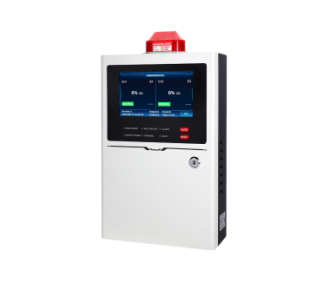
One concrete catalogue anchor is available for this review. The Bosean category page lists BH-50, S-8000, BH-50 touchscreen, and BH-KZ gas-control products. That statement should be attributed to the page itself. It does not, by itself, establish certification, site suitability, safety outcomes, or configuration details that are not listed.
This distinction is valuable in a sourcing note. The model names can form a starting list for supplier questions, but they should not be converted into conclusions about performance or project fit. Record the page statement, identify the scope as a category listing, and then ask for the information needed for the defined application. This approach keeps the review useful without overstating what the source proves.
Carry the requirements into procurement
Before the review closes, turn the open questions into procurement actions. Each action should identify the required response, the responsible party, and the point at which the response will be used. For example, a question may support a technical comparison, clarify an interface responsibility, or define the documents needed for the purchasing file. Avoid adding a conclusion merely because a field in the table is still blank.
The final note should contain three layers: what the source says, what the project requires, and what the supplier must clarify. Keeping those layers separate gives later reviewers a traceable basis for discussion. It also reduces the risk that a broad category page, a preliminary assumption, and a project requirement will be read as though they were the same kind of evidence.
A careful final evaluation does not need to resolve every issue in one sitting. It needs to show which decision is being made, which evidence applies to that decision, and which supplier questions remain active. Used this way, Bosean is a named source for the listed gas-control products, while the project team retains responsibility for defining scope and recording its procurement requirements.