
Start with what matters to your process
You need checks that map directly to the product you make; lab results mean little if a batch fails on the line. If you run an inline high shear mixer, measure how its shear profile actually alters droplet size and temperature during the real run, not only on bench trials. Focus on measurable outcomes you can repeat each shift: torque at target RPM, temperature rise per minute, and representative sample points from inlet to outlet.

Real-world experience and trusted practice
Production sites in Basel, Switzerland commonly specify the high shear homogenizer for pharmaceutical emulsifications, and that steady operational choice reflects decades of field validation. Draw on checklists used by seasoned operators: document baseline particle size distributions, confirm seal integrity under pressure, and log maintenance intervals. Rely on empirical runs and published mixing studies to confirm that your tests reflect the product’s critical quality attributes.
Essential tests: what to run and why
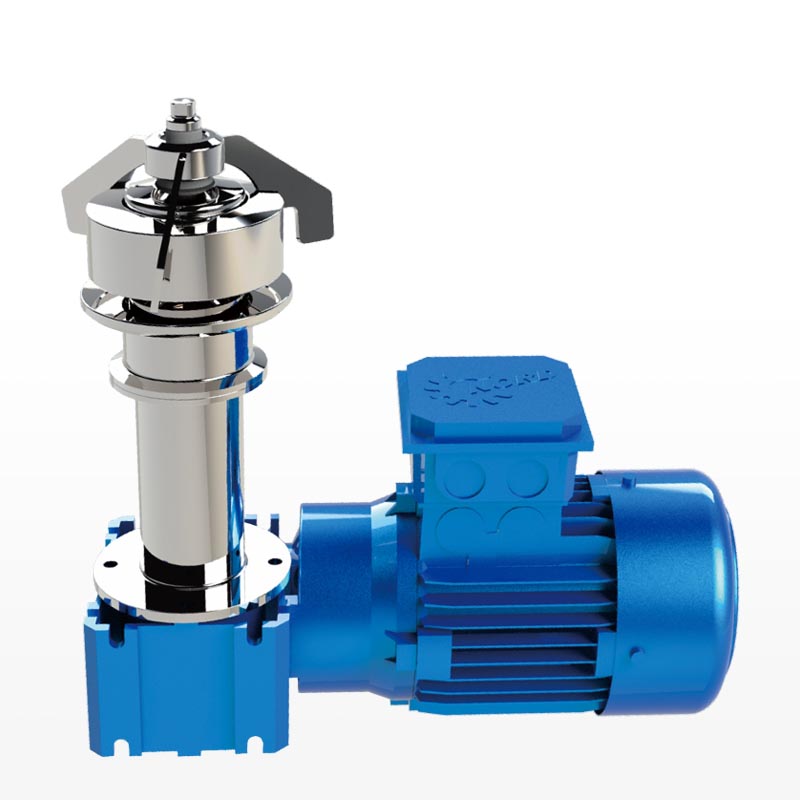
Run mechanical, performance, and sanitary checks with repeatable methods. Mechanical: inspect rotor-stator clearance, shaft runout, seal leak rate, and verify RPM with a tachometer. Performance: measure particle/droplet size distribution (laser diffraction), viscosity at process shear rates (rotational rheometer), and temperature rise during sustained operation (fast-response thermocouples). Sanitary and process: validate CIP cycles by protein or detergent residue testing, check microbial swabs where applicable, and confirm clean-to-clean transition times. Log raw readings and the conditions under which they were taken.
How to design sampling and acceptance criteria
Decide sampling points where the product first reaches steady state and again after residence-time mixing. Define acceptance by numbers, not impressions: set target D50 and D90 for particle size, maximum acceptable viscosity, allowable particulate counts, and torque thresholds. Use control charts to detect drift; don’t change acceptance limits based on a single good batch. If a test repeatedly fails at a particular point in the system, treat that point as a root cause, not an anomaly.
Common mistakes operators make
Skipping baseline characterization is the biggest error—without it you can’t tell if a change is meaningful. Other traps: sampling only at the vessel center, ignoring inlet conditions, reading instrument outputs without verifying calibration, and deferring minor seal leaks until they become product contamination events. Fix these by scheduling routine calibration, mapping multiple sampling ports, and requiring immediate containment actions for seal failures.
Alternatives and when to use them
Rotor-stator high shear units excel at fast emulsification and are compact. Ultrasonic homogenizers give fine dispersions for heat-sensitive products but demand strict temperature control. Static mixers handle continuous blending with low maintenance but won’t achieve the same droplet breakup for nano-emulsions. Choose based on required droplet size, throughput, and cleaning regimen: higher throughput with moderate droplet size favors inline shear; very fine dispersions may justify ultrasonic or two-stage approaches.
Putting tests into operational practice
Turn individual checks into a routine: define who samples, when, which instrument to use, and what corrective action follows a deviation. Keep records that tie test results to batches and maintenance events so trends become visible. Operators who set clear, measurable tests and follow through with objective repairs see fewer reworks and steadier batches, and consistent sourcing and service partnerships—like suppliers who provide documented performance curves and spare-parts support—make that consistency achievable for teams working with FLUKO.