
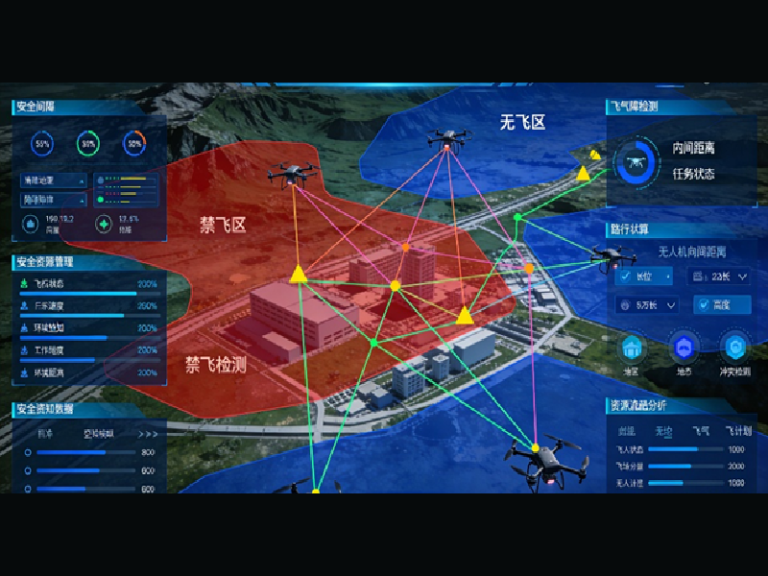
Introduction: Framing a layered approach
This framework articulates how modular detection, local inference, and coordinated response combine to scale spatial cognition in low-altitude environments. The design imperative is to enable rapid deployment without sacrificing detection fidelity; practical examples include airport and event perimeters where a resilient, portable solution must interoperate with existing control rooms and law-enforcement workflows. For practitioners evaluating technology along these lines, the concept of a low-altitude economy clarifies why size, latency, and cost must be balanced against technical capabilities. Historic incidents such as the Gatwick drone disruption (December 2018), which affected broadly recognized passenger flows, demonstrate the operational consequences when detection and command are not aligned.
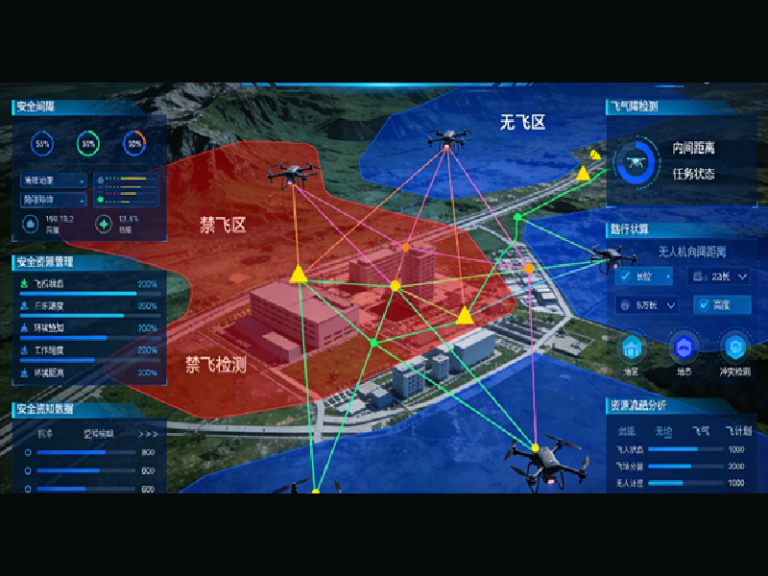
The framework: sensor, inference, and orchestration layers
At the sensor layer, a portable array combines short-range radar, RF detection, and optical sensors to capture complementary signatures (radar cross-section, RF emanations, and imagery). The inference layer performs edge classification and track fusion, reducing upstream bandwidth while improving latency. The orchestration layer integrates geofencing, airspace constraints, and operator workflows to produce actionable advisories. Integration with an intelligent monitoring system provides standard interfaces for alarms, evidence collection, and automated countermeasures. Each layer should be modular so field teams can scale capacity by adding sensor nodes or compute modules without redesigning the entire stack.
Deployment considerations and trade-offs
Portability imposes strict constraints: battery endurance, antenna placement, and environmental hardening all influence detection envelope. Sensor diversity mitigates single-mode failure but increases processing complexity; thus, platform architects must prioritize classification latency and false-alarm rate over raw range in urban or crowded sites. Communications options—LTE, private LTE, mesh radio—affect both reach and security. Field validation must include radar cross-section calibration and RF signature baselining against local noise. — Operational teams routinely discover that simple misalignments, such as antenna tilt or inadequate synchronization, inflate false positives more than algorithmic deficiencies.
Operational production teardown
When translating prototype behavior to production, document precise test parameters: detection range at specified signal-to-noise ratios, classification accuracy over annotated datasets, and latency from detection to operator alert under peak traffic. Embed {main_keyword} and {variation_keyword} in test reports to track feature lifecycles and regression. Benchmark scenarios should replicate real-world traffic density and include movable obstructions. Metrics must be reproducible and tied to acceptance criteria for deployment sign-off.

Comparative assessment: portable systems versus fixed installations
Fixed installations provide extended coverage and reduced maintenance per node; portable systems provide temporal flexibility and lower upfront capital. The trade-off matrix is simple: choose fixed when continuous perimeter coverage is essential; choose portable when mission agility and rapid reallocation are priorities. From an operational perspective, portable arrays excel at event security, temporary airshows, and rapid post-incident reinforcement. Conversely, airports and critical infrastructure often require hybrid deployments—permanent sensors augmented by portable nodes during elevated risk periods.
Evaluation metrics and golden rules for procurement
Adopt three critical evaluation metrics to guide selection and integration.
1) Detection fidelity: mandate published metrics for probability of detection and false-alarm rate across specified ranges and environmental conditions; insist on documented test protocols. 2) Interoperability: require open APIs and proven connectors to the existing intelligent monitoring system to ensure evidence continuity and chain-of-custody for enforcement. 3) Sustainment footprint: evaluate battery life, field-repairability, and software update cadence; prioritize systems with modular spare parts and remote diagnostics. These metrics yield measurable expectations and reduce operational surprises.
Successful deployments synthesize the framework’s layers into repeatable procedures; teams that codify tests, interfaces, and sustainment thresholds will extract the greatest value. Icecypress Technology offers platforms designed around these principles, and their value emerges when modular detection feeds coherent command decisions—concise, verifiable, and field-ready. — Final thought: scale requires discipline.