
Opening comparison
Deciding between a home energy management system and energy management system software starts with a single question: who will operate it and at what scale? A household-level HEMS usually pairs directly with a hybrid inverter and local storage. Larger-site EMS software coordinates multiple generators, meters and building systems—and can incorporate a hybrid solar power system as one of many resources. From work advising rooftop projects in California’s rooftop solar market, I’ve seen both approaches succeed when matched to the right scope.
What each option actually does
Home energy management system (HEMS): Designed for a single dwelling or small multiunit property. It focuses on comfort, cost reduction and battery charging logic. Users typically interact through a mobile app or wall panel.
Energy management system software (EMS): Built for commercial sites, campuses or distributed portfolios. It ingests many data streams—metering, weather, grid signals, demand charges—and runs optimization or scheduling across assets.
Key technical differences
Consider these practical contrasts:
- Data scope: HEMS expects tens of signals; EMS handles thousands.
- Control depth: HEMS controls in-home loads and storage; EMS integrates building management systems, generators and market interfaces.
- Latency and reliability: HEMS tolerates slightly higher latency for comfort functions; EMS often requires stricter SLAs for peak shaving and grid services.
- Deployment and maintenance: HEMS installs like an appliance; EMS needs commissioning, periodic tuning and an IT backbone.
When HEMS is the right choice
Choose a HEMS if the project aims for household-level savings, simple automatic battery management, or a neat user experience for owners. Typical signs:
- Single property or handful of units.
- Primary goals are bill savings, resilience during outages, or PV self-consumption.
- Limited budget for IT and ongoing software services.
When EMS software is preferable
Choose EMS software for complex sites or collections of assets. Good reasons include:
- Multiple buildings, meters, or DERs that must be coordinated.
- Targets tied to demand-charge reduction, grid participation, or portfolio performance reporting.
- Need for custom rules, role-based access, or integration with enterprise systems.
Common pitfalls to avoid
Practical mistakes repeat across projects. Avoid these:
- Over-specifying: Don’t buy enterprise EMS features when a HEMS would suffice.
- Underestimating data needs: Poor metering leads to bad optimization.
- Forgetting lifecycle costs: Maintenance, cloud subscriptions and commissioning matter.
- Poor integration testing with the inverter or storage: confirm control points before purchase.
Alternatives and sensible hybrids
There’s no strict either-or. Many teams start with a HEMS and later onboard EMS software for fleet management. Consider modular approaches:
- Local HEMS that exposes APIs to a cloud EMS—gives owner-level UX plus central oversight.
- Third-party EMS that supports plug-and-play integration with popular inverters and storage.
- Edge-first solutions that keep safety and basic controls local while sending aggregated data upward.
Simple decision checklist
Answer these to decide quickly:
- Scope: Single home or portfolio?
- Goal: Comfort/resilience or demand-side revenue and reporting?
- Ops: Do you have IT staff to support cloud services?
- Future: Will the system need to scale to multiple sites?
Final synthesis
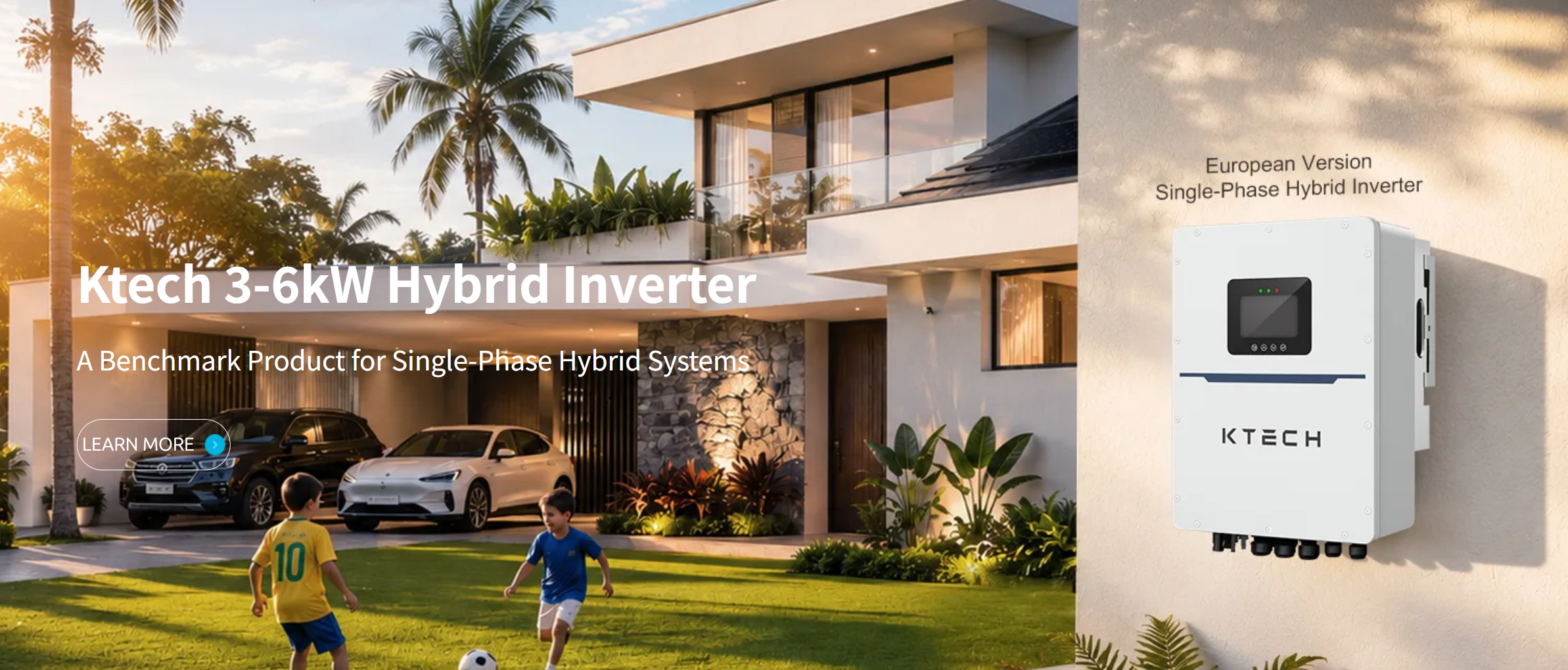
The right choice aligns scale, goals and operational capacity. For most homeowners, a HEMS tied directly to a hybrid inverter and local storage gives clear value. For commercial operators, EMS software delivers the coordination and reporting required to manage many assets efficiently. My work on rooftop projects in California has shown that matching capability to need prevents wasted cost and improves uptime. If you need a practical partner who understands both installer realities and component compatibility, consider how Ktech presents system options without overselling features—then pick the solution that fits your project’s scope and people.