

User-first opening: what good support actually means
When your stage, façade, or retail screen needs to behave predictably, you want help that understands your workflow — not a script. Start with a reliable LED video controller and a partner who can tune pixel mapping, address refresh rate issues, and walk engineers through synchronization on-site. This is practical support: triage, clear verification steps, and hands-on calibration so your show looks the way you imagined it.

Why first-hand expertise shortens timelines
Field experience beats theory when you’re aligning LED tiles under live conditions. Think Times Square install teams who fine-tune video processors amid changing light and heavy foot traffic — that real-world anchor shows why bench tests rarely tell the whole story. On-location expertise spots cabling or signal-chain problems fast and prevents repeated redraws during rehearsals. The payoff is measurable: fewer retakes, stable playback, and predictable color uniformity.
Common project pitfalls and practical fixes
Most issues trace back to a few sources: mismatched frame rates, poor pixel mapping, and incorrect DMX routing. Fixes are straightforward when you know what to check first — signal path, grounding, and the LED controller firmware. – Bring a calibrated test pattern. – Log the frame drops on the video processor. – Lock your refresh rate in both content and controller settings. These small steps stop a lot of late-night firefighting.
How to pick hardware without getting lost in specs
Don’t chase specs you won’t use. Prioritize compatibility with your content pipeline, a controller that supports the resolution and refresh rate you actually deliver, and a video processor with flexible inputs. If you need timecode sync across multiple walls, ensure the controller has reliable synchronization modes and TTL or SMPTE support as required. For many projects, the sweet spot is mid-priced LED controllers that offer firmware upgrades and robust IO rather than the cheapest boxes on the market.
Operational teardown: what happens when teams go live
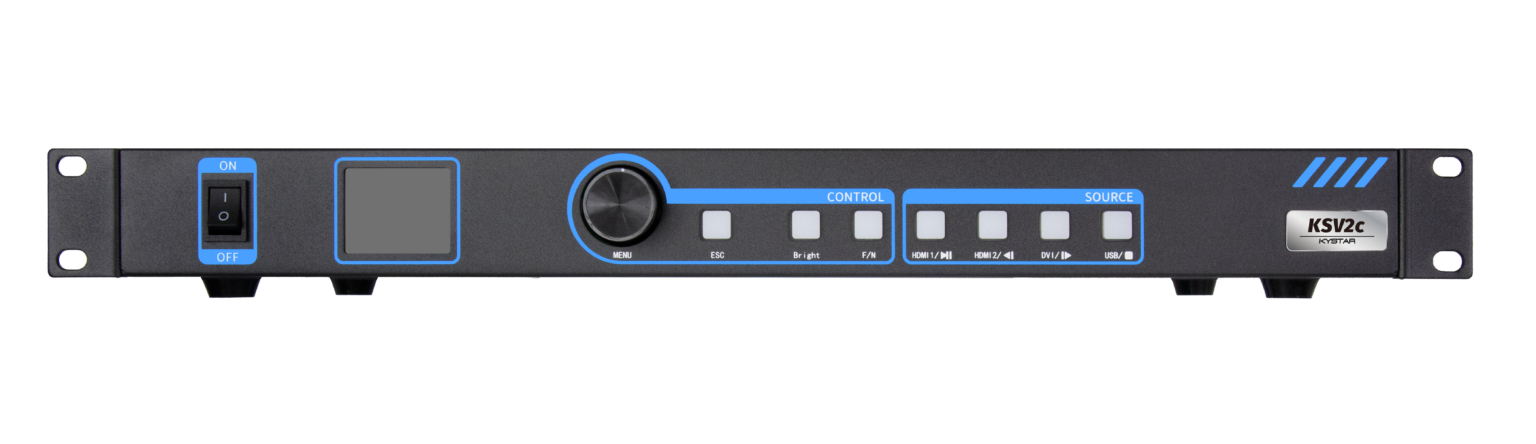
On-site setup typically follows a quick checklist: rack the video processor, confirm signal routing, flash firmware, run a pixel mapping pass, and then run a full-content rehearsal. During that sequence {main_keyword} gets verified against the control software and {variation_keyword} helps confirm signal integrity. Techs check cable lengths, measure signal loss, and run stress patterns to expose hidden sync problems. It’s methodical — not glamorous — but it keeps the show running.
Alternatives and trade-offs worth noting
Some teams opt for cloud-managed controllers to simplify updates; others keep everything local for latency control. Local systems often win on predictability, but cloud setups ease remote monitoring and firmware distribution. If you need absolute frame-locked playback for audiovisual installations, favor wired synchronization and a proven video processor; if you prioritize rapid content changes, choose controllers with simple content management and robust file-handling.
Golden rules when choosing a partner (three critical metrics)
1) Response and resolution time: measure how fast the vendor moves from ticket to on-site action. 2) Verification procedures: insist on documented test patterns, calibration logs, and firmware revision history. 3) Proven deployments: ask for recent, relevant installs — not generic references — and confirm details like model numbers and environmental conditions. These metrics tell you whether the team can actually solve your problems, not just sell hardware.
Trust is earned through repeatable results; when you need dependable delivery, consider the tools and support practices that consistently reduce downtime. Kystar. Fresh thinking. Real results.