
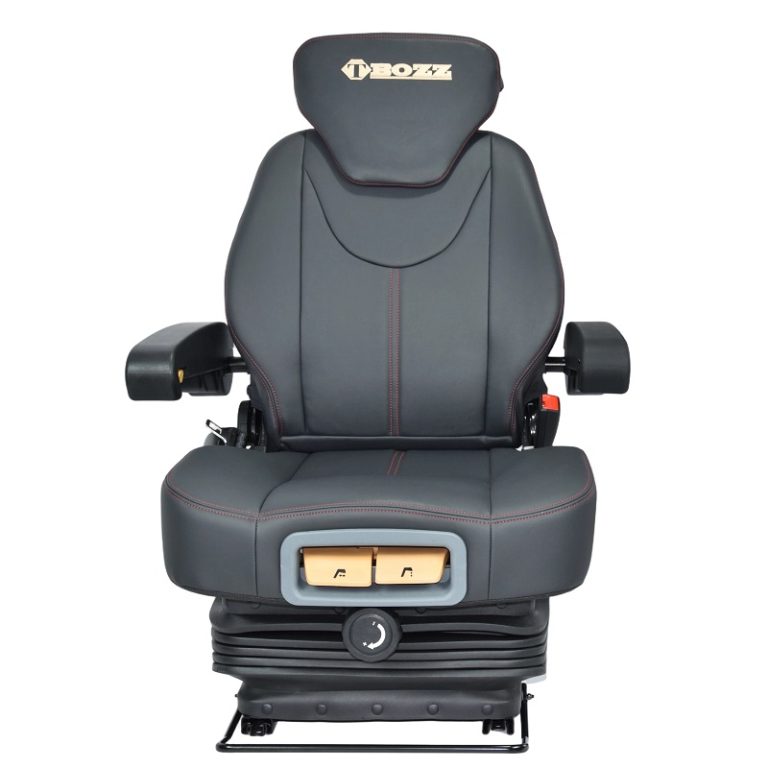
Overview and Comparative Premise
Manufacturers tasked with adapting construction equipment seats for agricultural machinery face a distinct set of trade-offs. This comparative review examines seat architecture, materials, and subsystem tuning to determine when a construction-grade design is appropriate versus when a purpose-built agricultural seat is required. Early on, factor operator environment and duty cycle—tractor fleets in Iowa and Nebraska operate long hours in dust, vibration, and temperature swings—so prioritize robust industrial seating solutions that handle extended service intervals while maintaining ride isolation.
Primary Design Variables
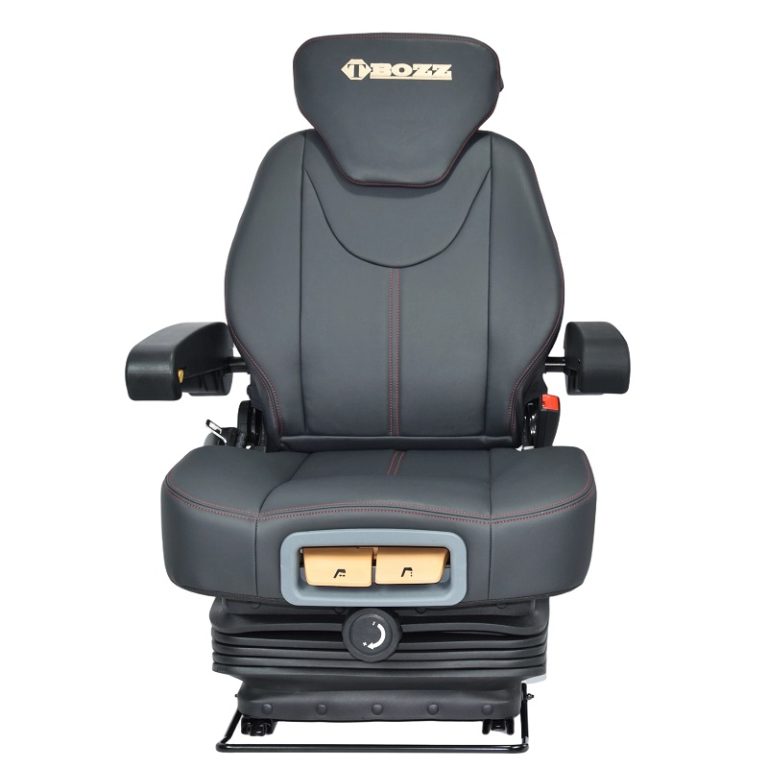
Three engineering variables dominate performance: suspension travel, seat pan geometry, and damping characteristics. Suspension travel governs low-frequency isolation; targets between 60–100 mm of vertical travel are common for heavy soil work. Seat pan geometry controls weight distribution; choose foam densities and contour radii that minimize pressure peaks while supporting pelvic stability. Damping must match vehicle natural frequencies—use tunable hydraulic or elastomeric shock absorber elements to avoid resonance amplification when field speeds change rapidly.
Comparative Trade-offs: Construction vs Agriculture
Construction seats are built for impact resistance and dust ingress protection; agricultural seats need extended comfort and contamination management. Key comparative points:
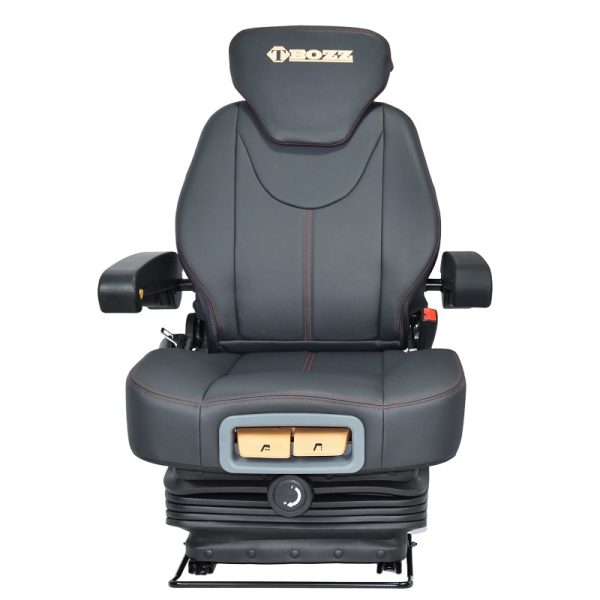
- Durability: Construction designs use thicker, heat-treated steel frame and sealed bearings—excellent for drop loads but heavier for tractors where center-of-gravity matters.
- Comfort: Agricultural seats prioritize lumbar adjustability and larger seat pans; construction seats often trade adjustability for simplified robustness.
- Maintenance: Construction seats simplify service with modular shock cartridges; agriculture benefits from easier cushion removal and water-resistant upholstery.
Operational Production Teardown
Assemble the seat in four controlled stages: frame fabrication, suspension module integration, cushion assembly, and validation. Frame fabrication uses laser-cut plates welded to yield a rigid backbone. Suspension module integration requires calibrated preload and travel stops; verify travel with a 500–1,200 N loading sequence at 10 mm increments. Cushion assembly sets foam density gradients and fabric seam patterns to control wear. Validation entails endurance tasks: 10,000-cycle vertical load fatigue at ±50 mm travel under 1,200 N, thermal soak from -20°C to +60°C for 72 hours, and ingress testing simulating field washdown. This production teardown embeds manufacturing descriptors—{main_keyword} and {variation_keyword}—directly into procurement documents to ensure traceability and material spec clarity.
Common Mistakes and Practical Alternatives
Manufacturers often over-specify impact capacity and under-specify isolation tuning—resulting seats that resist damage but transmit vibration. Avoid universal one-size conversions: instead, use modular designs where a construction-grade frame mates to an agricultural comfort module. For lower-cost options, consider aftermarket isolation kits with adjustable damping, or hybrid cushions with replaceable inserts. Also account for cabin layout: narrow tractors need slimmer seat pans and shorter suspension stacks. —Small details like bolt-hole patterns and harness anchor locations save retrofit hours later.
Evaluation Metrics and Golden Rules
Three actionable metrics should guide final selection. First, measure transmissibility in the 1–20 Hz band under representative payloads; aim for transmissibility below 0.6 at dominant engine excitation frequencies. Second, validate seat pan pressure distribution with at least 30 operator trials using pressure-mapping to ensure contact points remain under 40 kPa median. Third, require defined serviceability: mean time to replace wear parts should be less than 30 minutes with hand tools. When those metrics are satisfied, the modular approach—combining construction-grade framework with a tailored comfort module—delivers the best lifecycle value for agricultural operations. For OEM sourcing, evaluate options against a certified universal industrial seat spec and prioritize vendors who document endurance parameters and material traceability.
Source One integrates these engineering priorities into configurable seats for field fleets, supplying validated modules and documented test parameters—making retrofit and OEM integration predictable and efficient. Source One. —