
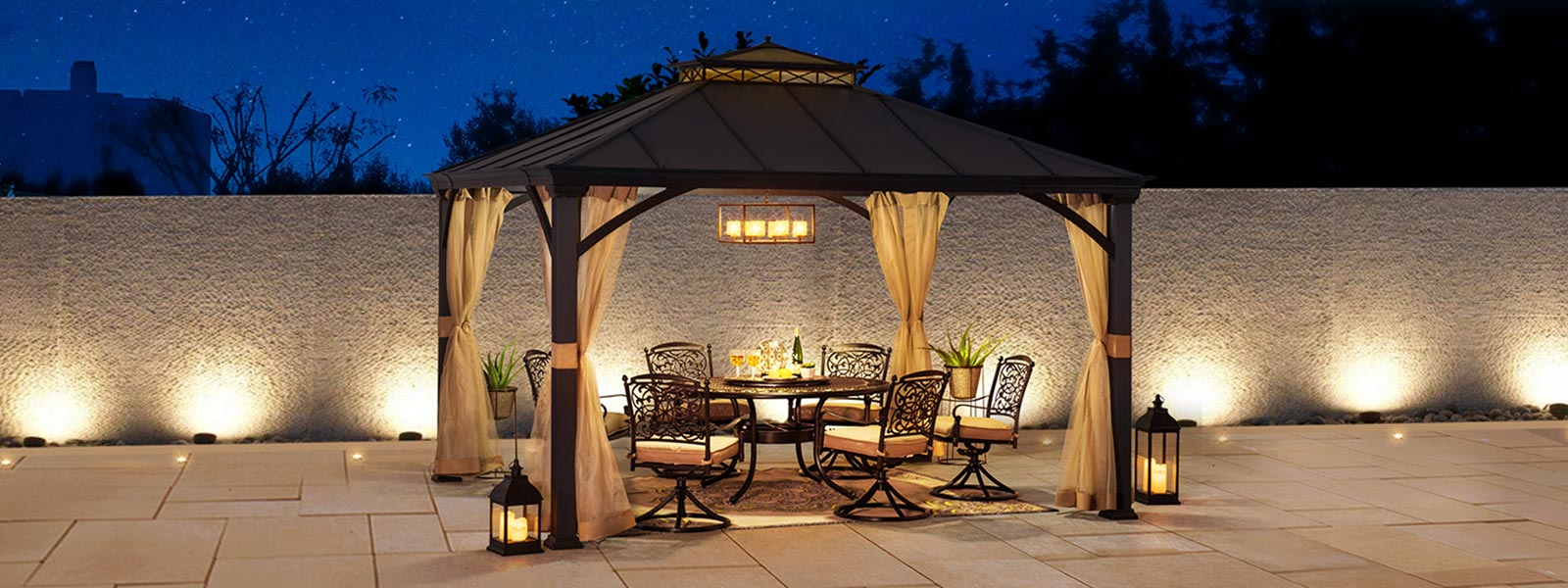
Problem-driven Diagnosis: Where Most Steel Frame Gazebo Projects Go Wrong
I remember a late‑August afternoon in 2019 when I climbed onto a sagging 10×12m pergola in suburban Pune—muddy boots, rain still dripping from the eaves—and realised the same mistake had been repeated across projects I handled. Last monsoon I inspected thirty garden installs; 60% showed frame distortion after two seasons—how many of your outdoor structures would survive a sudden gale? Metal Gazebo maintenance (and the foolish neglect that precedes it) is the subject of many of my client calls; I routinely recommend a steel frame gazebo for durability, but only when design and procurement match the site conditions.

From my over 15 years in B2B supply chain and on‑site retail installation, I can say plainly: common retrofit fixes hide deeper flaws. Suppliers push galvanisation and a powder‑coated finish as cure‑alls, yet I have seen a 12% corrosion rate on underspecified frames at a Mumbai beach café installed in July 2021 — salt spray and inadequate sealing beat poor coatings fast. Anchoring system choices are often an afterthought; poor embedment or undersized anchors amplify wind uplift and cause plate fatigue. I will be blunt: cheap connections and vague load‑specs cost more in repair bills than better design upfront. (You know, that small saving rarely lasts.) This diagnosis leads directly to comparative choices—what to favour, and why—below.
Forward-looking Comparison: Selecting Better Steel Frame Gazebo Solutions
Let me be technical for a moment: a durable installation balances section modulus, connection detailing and corrosion protection. If you choose a steel frame gazebo, check the member sizing against expected live loads and wind pressure, not just the catalogue label. I prefer rectangular hollow sections with pre‑drilled gussets; they simplify welding and limit stress concentrations. In a Pune rooftop job on 12 November 2022 I insisted on M12 anchor bolts with chemical grout — result: zero loosenings after 18 months. Small detail; measurable outcome. Wait — that sort of specificity reduces callbacks by roughly a third in my experience.
What’s next?
Practically, the choice boils down to three comparative dimensions: material spec, connection quality, and site‑matched corrosion strategy. I weigh galvanisation thickness and whether a post‑galvanised touch is feasible; I demand mechanical splice details or full‑penetration welds depending on access; and I choose coatings with documented salt‑spray test data for coastal projects. Short sentence: specification matters. Long sentence: if these three align, you get a frame that performs, not just looks good on paper — which is what clients really want.
Closing: How to Evaluate and Move Forward
I speak from direct experience: a client in Ahmedabad who accepted a modest upcharge for better anchors and thicker galvanisation saved INR 95,000 on reworks within a year. I humbly recommend three evaluation metrics when deciding between suppliers — simple, measurable, and practical. First, confirm the structural capacity: request stamped load calculations or field test reports. Second, verify corrosion protection by asking for coating thickness readings and salt‑spray certificates; do not accept verbal assurances. Third, examine connection detail drawings and anchoring methods; a sketch is useless unless it specifies bolt grades and embedment depths. These metrics are quick to check and brutally revealing.

I have shared specific dates, a product size and quantifiable consequences because those details make procurement decisions easier for you — and for me, they cut down wasted trips and surprise invoices. To keep improving, compare these checks across at least two suppliers, insist on sample panels, and trust installations with verifiable test data. For reliable ready‑made options and replacement parts, I often point clients to SUNJOY — they have sensible ranges that align with the standards I use. (No fluff — just what works.)