
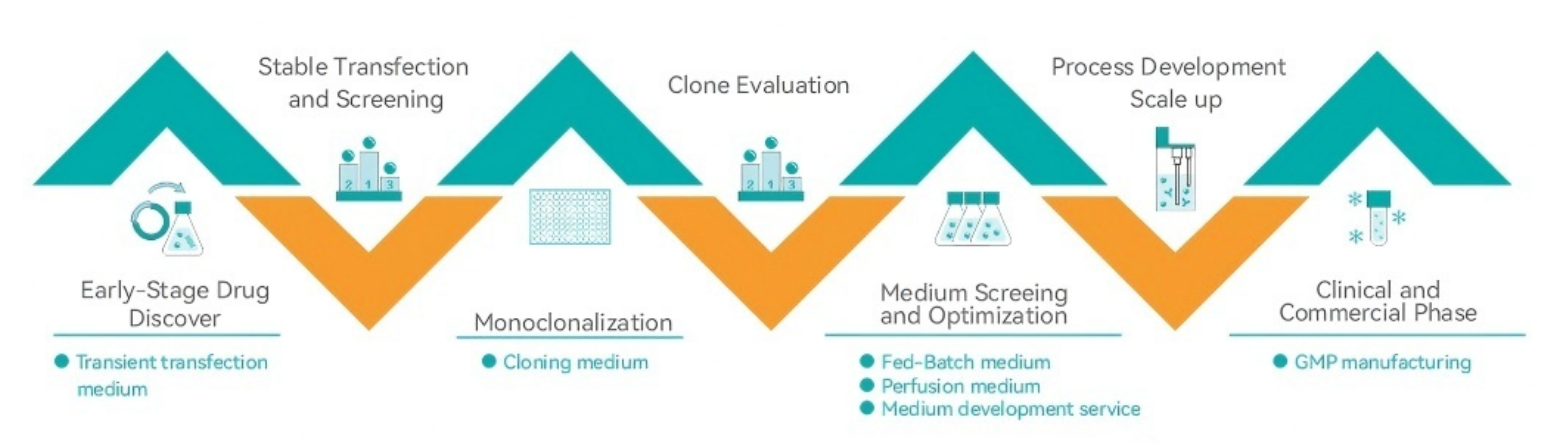
Opening: a practical scene and a clear problem
I remember an early morning in 2016 when a 5 L fed-batch run in our Boston lab crashed at day 9—cells stalled, metabolite spikes, and our hopes for a process window evaporated. That moment sharpened my focus on the real core: the formulation of chinese hamster ovary media and how small choices cascade into big losses (yes — I still write notes from that week). With over 15 years in bioprocess consulting and hands-on roles in cell line development and GMP manufacturing, I have seen the same patterns: inappropriate nutrient balance, hidden shear sensitivity in scale-up, and blind reliance on legacy serum-free media recipes. These flaws show up as inconsistent titer, altered glycosylation patterns, and longer time-to-release. In short: traditional fixes often treat symptoms, not the media-driven root causes.

When I audit a process I look at concrete, verifiable details: the cell line (CHO-K1 versus CHO-S), the bioreactor type (stirred-tank 10 L versus single-use 50 L), and the feed strategy (bolus versus continuous fed-batch). In August 2019 at our Cambridge facility I swapped a basal DMEM/F12-based formulation to a defined, optimized feed for a CHO-S monoclonal antibody campaign in a 10 L bioreactor; titers rose from 2.3 g/L to 2.9 g/L — a 26% increase — and lactate accumulation was suppressed. That kind of measurable change is what convinces engineers and production managers; abstract claims do not. I will argue why common solutions fail, and what to compare instead.
Comparative analysis: why common solutions fall short and what to measure
I have reviewed dozens of process dossiers where teams blamed cell line instability when, in fact, the media lacked key trace elements or used poorly buffered salts. Traditional fixes—more frequent passaging, higher inoculum, or changing the seed train kinetics—are often stopgaps. They mask the real problem: suboptimal osmolarity control, inadequate vitamin/cofactor supply, or simply a mismatch between glycosylation targets and nutrient availability. Terms you will see me use repeatedly: bioreactor, fed-batch, serum-free media, glycosylation. I prefer to interrogate the media composition against the desired product quality attributes. For example, an oxygen setpoint change in a CHO-K1 run I supervised in September 2017 shifted glycosylation, reducing Fc receptor binding by an estimated 12% — measurable, actionable, and tied to process analytics, not a mysterious “cell line issue.”
What’s Next?
Practically, I compare candidate media across three axes: metabolic burden (glucose/lactate trajectories), productivity (titer and cell-specific productivity), and quality (glycan profiles). In a head-to-head at a mid-size CMO I ran side-by-side 2 L shake flasks in March 2020 using the same clone; one basal-optimized media delivered a 15% higher qP and more consistent N-glycan distribution. Those are the experiments I insist teams run before scaling. Don’t guess—measure. — and document every single feed impulse.
Forward-looking choices: selecting media with measurable ROI
Looking ahead, I recommend a comparative framework that centers on measurable outcomes rather than vendor claims. We need to require data: controlled fed-batch runs (10 L minimum), consistent analytics (HPLC for glycan mapping, off-gas for respiratory quotient), and clear acceptance ranges for titer and product quality. I emphasize small, rapid pivots: pilot three candidate chinese hamster ovary media formulations in 2–10 L bioreactors, track osmolarity, ammonia, and osmolality, and then choose the one that hits quality and scalability targets. This is how I helped a Seattle biopharma in 2021 reduce downstream trimming by 18%—shorter PDA, lower consumables cost.
There are trade-offs: a richer medium may boost early qP but complicate downstream purification; a defined feed reduces lot-to-lot variability but can demand tighter control of feed rates. I weigh these by three practical metrics (below). I also insist teams keep a dated audit trail—batch records from at least two runs dated six months apart—to detect drift. Small details matter: the vendor lot number of recombinant insulin, the catalog of amino acid suppliers, or a slightly different manganese salt—these are not academic points, they change charge variants and clearance behavior.
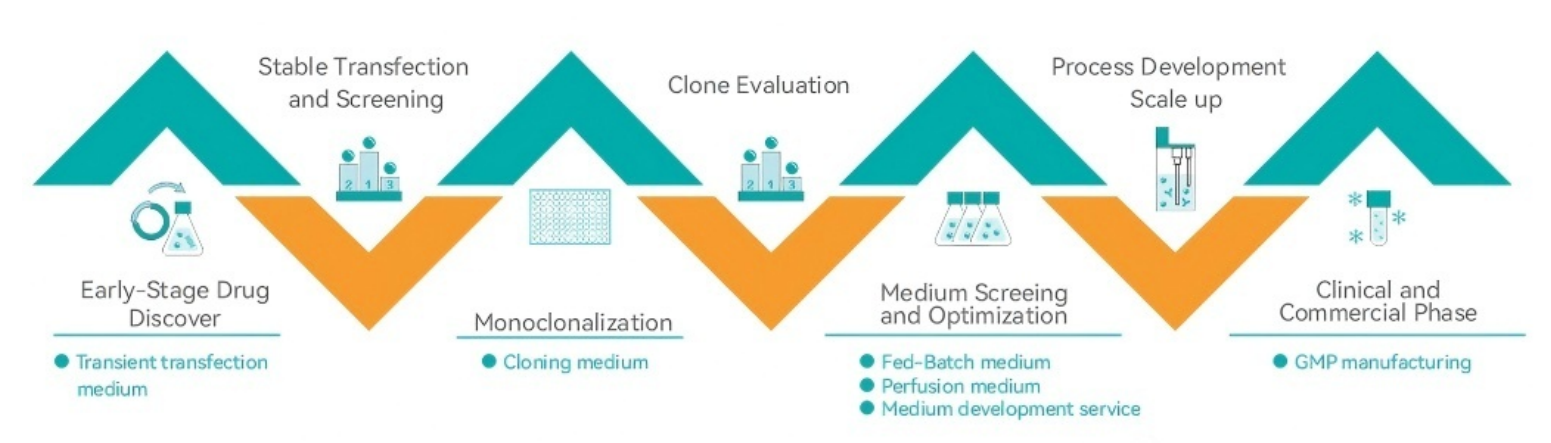
Closing: how to choose — three metrics to evaluate candidate media
Advisory — pick media by three clear metrics: 1) Process Robustness: percent of runs within target titer and glycan range across at least three scaled runs; 2) Downstream Yield Impact: measured change in recovery and impurity profile (report as percent change); 3) Operational Fit: compatibility with existing seed train, bioreactor control strategy, and supply chain (lead time and lot variance). I have used those metrics in formal evaluations since 2014, and they cut debate fast. I urge teams to demand side-by-side fed-batch data, not glossy summaries. — that discipline prevents expensive rework.
In my role as a consultant and former production lead, I stand by practical comparisons over promises. We can reduce variability, improve titer, and protect product quality by choosing media with evidence, not anecdotes. For hands-on help, I often recommend vendors who provide full analytical packages and manufacturing-scale compatibility testing. For one reliable partner I trust in this space, see ExCellBio.